
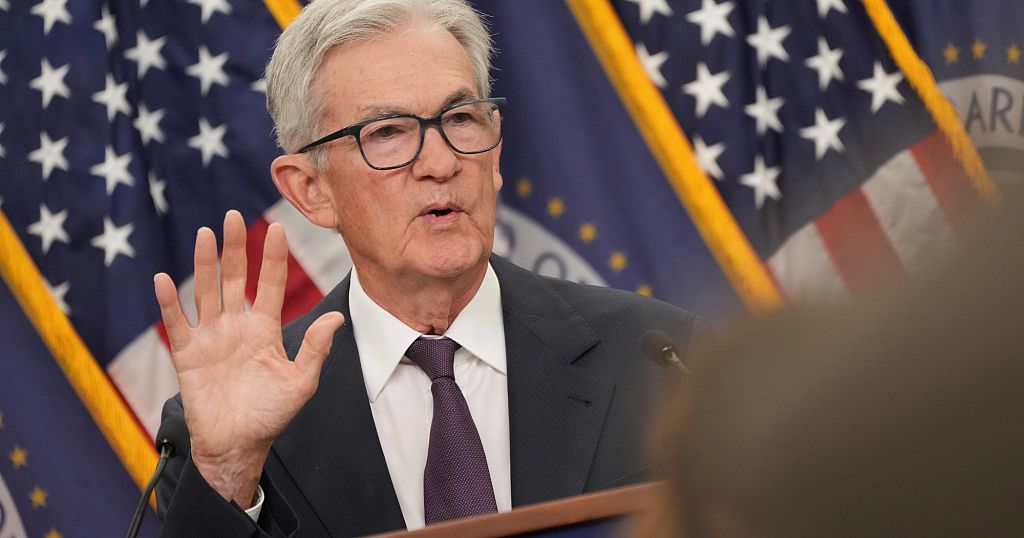
The Federal Reserve has lowered its key interest rate by a quarter‑point to roughly 4.1%, marking its first cut since December. The move is intended to address growing concerns about the health of the U.S. labor market. By reducing borrowing costs for mortgages, car loans and business loans, the Fed hopes to stimulate growth and hiring.
Earlier, Fed officials led by Chair Jerome Powell had left the rate unchanged while assessing the impact of tariffs and other policies on inflation and the broader economy. The focus has now shifted to the labor market, where hiring has slowed markedly and the unemployment rate has risen. Although lower rates could help mitigate these issues, Powell cautioned that the Fed is proceeding cautiously, projecting two more cuts this year and another in 2026. The decision was not unanimous; Stephen Miran dissented, favoring a larger half‑point cut. Powell emphasized that the committee remains data‑dependent and will keep policy options open.
The meeting’s outcome suggests Powell succeeded in maintaining unity among committee members, including those appointed by former President Donald Trump. The Fed’s action comes amid a challenging economic environment: inflation remains above the 2 % target while hiring weakens, creating uncertainty for policymakers. Powell acknowledged the risks, noting that there are no risk‑free paths and that the Fed must navigate carefully.
The central bank also faces threats to its independence, highlighted by Trump’s attempted removal of Fed Governor Lisa Cook—a move seen as an unprecedented attack on the Fed’s autonomy. Trump has criticized the Fed’s rate decisions and called for steeper cuts, but Powell has reiterated that the Fed’s choices are driven by data and economic conditions, not political pressure.
The rate cut puts the Fed at odds with other central banks. The European Central Bank left its benchmark rate unchanged last week, and the Bank of England is expected to hold its rate steady on Friday. As the global economy evolves, the Fed’s decisions will be closely watched, and preserving its independence will be crucial for navigating the complex economic landscape.


Comments are closed for this story.