
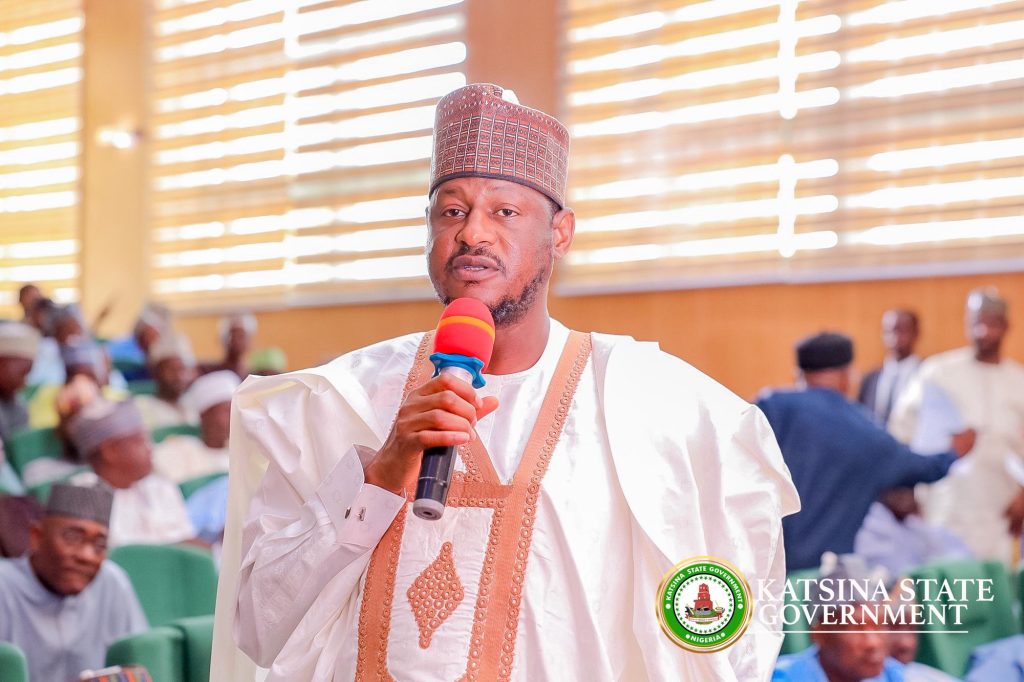
Governor Dikko Radda of Katsina State announced a new scholarship program for indigenes who have memorized the Holy Qur’an and hold the required five O‑level credits to study Medicine or Nursing. Unveiled during a one‑day stakeholders’ engagement hosted by the state’s Bureau of Statistics, the initiative aims to reform the Almajiri and Islamiyya education system. Eligible candidates can apply for a scholarship that will cover the entire duration of their studies.
The government also plans to launch a Qur’anic writing competition in Katsina through the Islamic Education Bureau. The engagement, which gathered various stakeholders, sought recommendations on how to effectively overhaul the Almajiri and Islamiyya system and address the problem of street begging. Governor Radda urged participants to provide maximum support, assuring Tsangaya school proprietors that the government will work closely with them to improve Qur’an teaching and learning. He noted that Qur’an memorizers could be regarded as professors and that the enhanced system will offer them certification opportunities.
Former Minister of Communications and Digital Innovation Prof. Isah Ali‑Pantami recommended incorporating skills training into the system so that Tsangaya school students become self‑reliant and less likely to resort to begging. Other speakers, including Prof. Mansir Ibrahim‑Sokoto and Sheikh Nasir Dahiru‑Bauchi, called for upgrading the Islamic Education Bureau, developing a curriculum for Islamic schools, and involving Tsangaya school proprietors in decision‑making. Prof. Umar Alkali of the University of Maiduguri highlighted challenges faced by previous reform attempts, emphasizing the need to address integration gaps, maintenance, and funding issues.
The stakeholders’ engagement marked a significant step toward reforming the Almajiri and Islamiyya system. The state government pledged continued support and resources to enhance education and improve the well‑being of its citizens. The proposed reforms aim to create higher‑education opportunities for indigenes, reduce poverty, and curb street begging, with collaborative efforts expected to yield positive outcomes for students and the broader community.




Comments are closed for this story.