
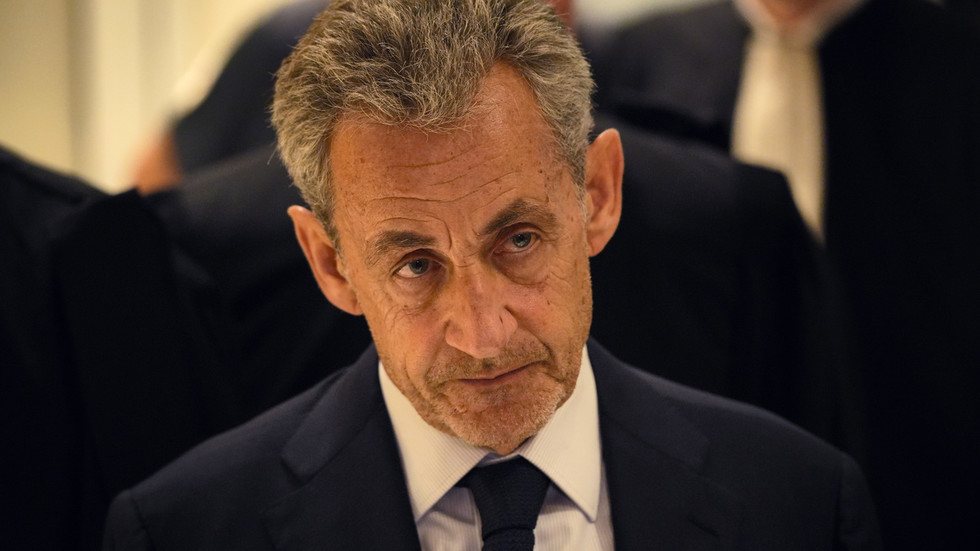
Former French President Nicolas Sarkozy has been sentenced to five years in prison after being found guilty of criminal conspiracy for receiving campaign funding from the late Libyan leader Muammar Gaddafi. A Paris court ruled that Sarkozy, who led France from 2007 to 2012, benefited from secret payments linked to his 2007 presidential campaign. The court ordered him to begin serving the term, although the start date will be set later, and he retains the right to appeal the decision.
The case originated in 2011 when Gaddafi’s son, Saif al‑Islam, claimed that his father had financed Sarkozy’s campaign with approximately €50 million. In 2012, Lebanese businessman Ziad Takieddine alleged that he had delivered €5 million from Tripoli to Paris in 2006, but later withdrew the claim. French authorities launched a formal investigation in 2013. Prosecutors argued that Sarkozy, while serving as interior minister in 2005, made a deal with Gaddafi to secure campaign funds in exchange for supporting Libya’s reintegration into the global community.
The court convicted Sarkozy of conspiracy but acquitted him of passive corruption, illegal campaign financing, and concealment of embezzlement. During the trial, Sarkozy denied the charges, describing them as politically motivated and a “plot” by the “Gaddafi clan,” and called his accusers “liars and crooks.” Prosecutors had sought a seven‑year prison sentence.
Sarkozy, 70, has a history of legal issues. In December 2024, France’s highest court upheld a corruption and influence‑peddling conviction from 2021, ordering him to wear an electronic tag for a year. He was also sentenced for illegal campaign financing related to his failed 2012 re‑election bid and served that term at home under monitoring. Earlier in 2025, he was stripped of the Legion of Honor because French rules remove members who receive prison terms of at least one year.
The conviction and sentencing mark a significant development in a case that has been ongoing since January. The court’s ruling that the conspiracy occurred between 2005 and 2007—before Sarkozy gained presidential immunity—has implications for his future. While he can appeal the decision, the sentencing underscores the gravity of the charges against him.

Comments are closed for this story.