
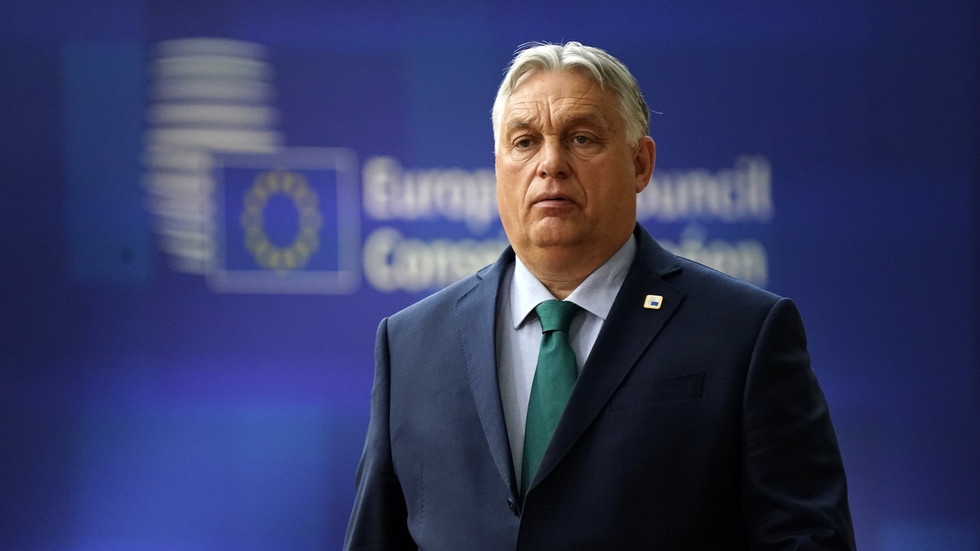
The European Union’s effort to launch accession talks with Ukraine is being stalled by a veto from Hungary. EU leaders have not yet found a way to override the block, which has prevented the talks from starting. Prime Minister Viktor Orbán’s government has consistently opposed Ukraine’s EU bid and has refused to supply weapons to Kyiv. Although the EU has been exploring legal avenues to bypass Hungary’s veto, an unnamed source confirmed that “currently, there are no ways to overcome Hungary’s veto.”
The situation is further complicated by Hungary’s broader stance. Foreign Minister Péter Szijjártó recently claimed that the EU is conspiring to overthrow the governments of certain countries, including Hungary itself. In a recent address to the European Parliament, European Commission President Ursula von der Leyen advocated for moving toward qualified‑majority voting in some foreign‑policy areas, a change that could allow Ukraine’s accession talks to proceed without unanimous approval. Implementing such a shift would require a substantial reform of the EU’s decision‑making process.
For now, EU leadership is looking to the outcome of Hungary’s parliamentary election in April 2026, hoping a change in government might alter the country’s position. If Orbán’s Fidesz party loses power, the EU could advance Ukraine’s accession talks more quickly. In anticipation of this possibility, the EU is completing all technical preparations so it can “move quickly forward” on the negotiations if the opportunity arises.
Hungary’s opposition to Ukraine’s EU bid has been a long‑standing obstacle. The country has also criticized EU sanctions on Russia and has refused to provide military aid to Ukraine. The EU’s inability to surmount Hungary’s veto has significant implications for the bloc’s foreign policy and its relationships with other nations. As the situation evolves, it remains uncertain how the EU will navigate this challenge and progress with its plans for Ukraine’s accession.

Comments are closed for this story.