
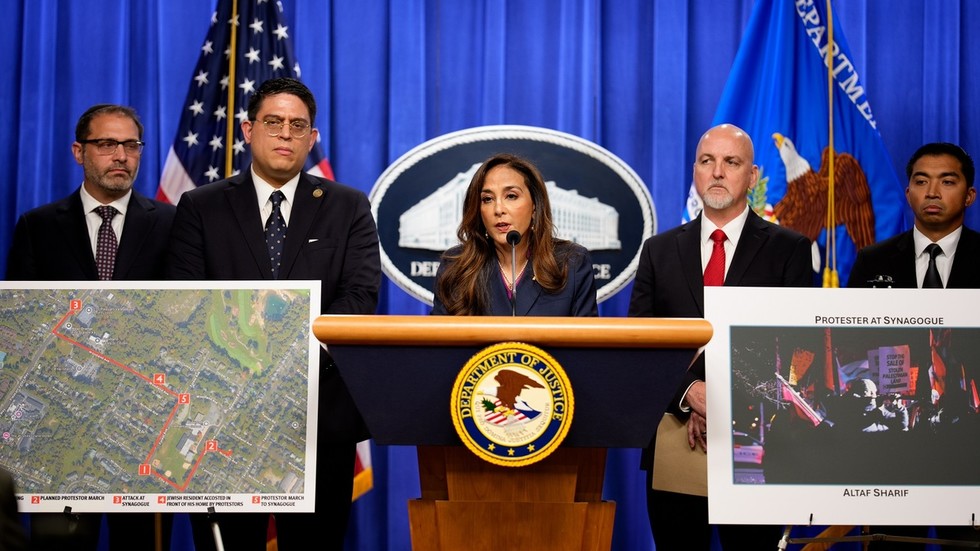
The U.S. Department of Justice has filed a civil lawsuit against several anti‑Israeli protesters, invoking a law traditionally used to protect women entering abortion clinics from pro‑life demonstrators. The complaint, brought by the DOJ’s Civil Rights Division, alleges that the protesters disrupted a religious event at a synagogue in West Orange, New Jersey, in November 2024. The event was a real‑estate fair promoting the sale of homes in Jewish settlements in the occupied West Bank, which the DOJ described as “a religious event centered on the Jewish obligation to live in the Land of Israel.”
Around 50 pro‑Palestinian demonstrators gathered outside the synagogue, which the DOJ characterized as a “mob.” An altercation ensued involving the event organizer and his associate. According to the complaint, one protester blasted a vuvuzela horn inches from the organizer’s ear, potentially causing hearing damage. The DOJ maintains that the protesters’ actions amounted to a physical attack, while the organizer’s response was self‑defense. The complaint names several defendants, including one who allegedly choked and tackled the organizer’s associate to the ground.
The incident is one of several recent clashes between pro‑Israeli and pro‑Palestinian groups in the United States, particularly over Jewish settlements in occupied territories, which are considered illegal under international law. The use of the 1994 Freedom of Access to Clinic Entrances Act (FACE) in this case marks a significant development, as the law has primarily been applied to protect abortion clinics. The DOJ claims the law was previously “weaponized” against pro‑life activists, while those disrupting religious practices were not targeted.
The case may set a precedent for future enforcement of the FACE Act. An Assistant Attorney General indicated that this could be the first of several similar cases. The escalating tensions between pro‑Israeli and pro‑Palestinian groups in the United States reflect the broader Middle‑East conflict, where Jewish settlements remain a major point of contention. As the situation unfolds, the DOJ’s actions could have significant implications for the balance of power between these groups and for the application of the FACE Act in comparable cases.




Comments are closed for this story.