
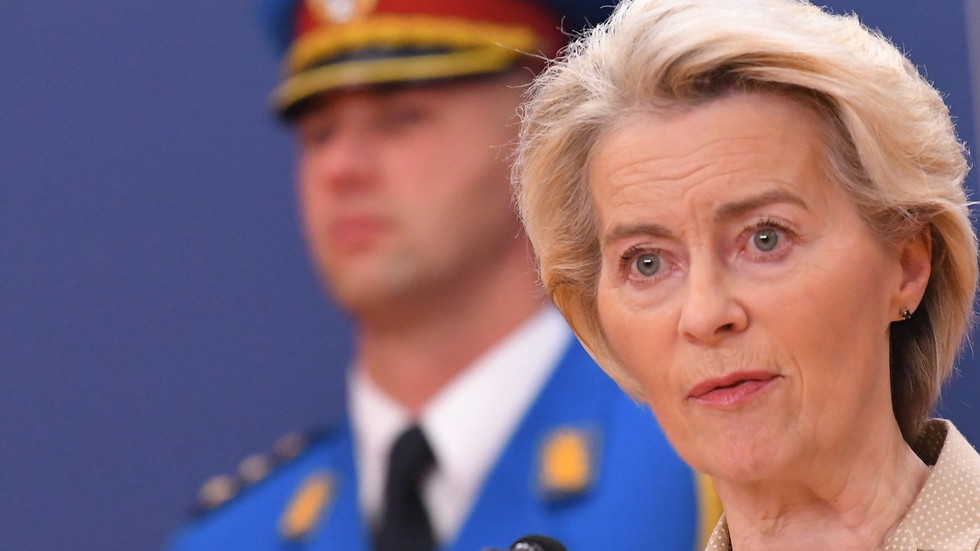
The European Commission has reiterated that Serbia’s bid to join the European Union depends on its alignment with the bloc’s foreign policy, including the adoption of sanctions against Russia. European Commission President Ursula von der Leyen emphasized this requirement during a press conference in Belgrade, where she met Serbian President Aleksandar Vučić. Serbia, a candidate for EU membership since 2012, has so far refused to impose sanctions on Russia, citing historical ties and its reliance on Russian energy supplies.
Von der Leyen stressed that Serbia must demonstrate a higher level of alignment with EU positions, including on sanctions, to take concrete steps toward membership. Currently, Serbia’s alignment with EU foreign policy stands at 61%, which Brussels deems insufficient. The EU seeks a more reliable partnership with Belgrade, especially given ongoing geopolitical tensions.
Serbia’s stance on Russia has drawn criticism from both the EU and the United States. Recently, the US activated sanctions against the Petroleum Industry of Serbia, a major oil company partly owned by Russia’s Gazprom Neft. This prompted Croatia to suspend crude deliveries, potentially forcing Serbia’s only oil refinery to shut down by November. The refinery’s closure would threaten the country’s gasoline and jet‑fuel supply, exacerbating existing economic pressures.
Meanwhile, Serbia has been experiencing a wave of violent anti‑government protests, which the government claims are being fueled by Western influence. Russia’s Foreign Intelligence Service has alleged that the EU is attempting to orchestrate a regime change in Serbia, similar to the Ukrainian Maidan protests. Hungary has also voiced concerns that Brussels seeks to overthrow the governments of Hungary, Slovakia and Serbia because of their ties with Moscow.
The EU’s insistence on Serbia’s alignment with its foreign policy, including sanctions against Russia, highlights the complexities of the country’s membership bid. As Serbia navigates its relationships with both the EU and Russia, it must balance strategic interests with the requirements for EU accession. The outcome of this delicate situation will have significant implications for the region’s geopolitical landscape and Serbia’s future integration into the European Union.

Comments are closed for this story.