
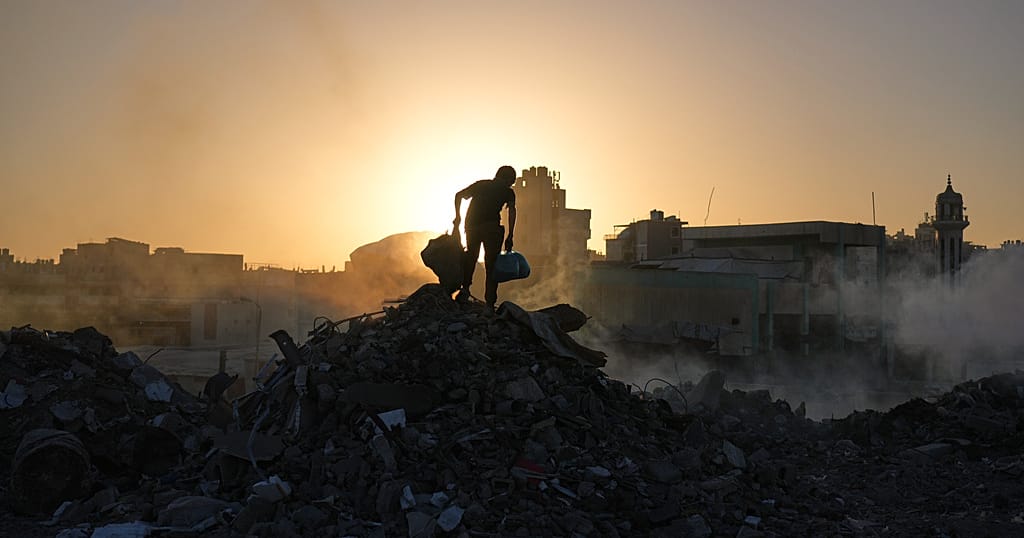
The Gaza Strip is confronting a severe environmental and humanitarian crisis driven by an escalating garbage problem. Even before the war, the region struggled to manage its waste, producing tons of refuse daily with only three landfills to accommodate it. The situation has now deteriorated dramatically, forcing residents to live amid piles of rubbish.
The Israeli blockade has restricted sanitation crews from reaching waste‑disposal sites in eastern Gaza City, prompting authorities to establish an emergency landfill in the city centre. What began as a temporary measure has quickly become a public‑health disaster. Residents are exposed to toxic gases, swarms of insects and foul odors, creating hazardous living conditions for thousands. The accumulation of waste in densely populated areas fuels the spread of disease and worsens existing health problems, especially for children, the elderly and those with pre‑existing conditions. “The problem worsens every day, and the damage is increasing. Children have developed skin allergies because of the waste,” a Gaza City resident reported.
A lack of equipment to remove the garbage has compounded the crisis, posing a direct threat to the health and well‑being of Gaza’s population. If left unaddressed, soil and groundwater contamination could have long‑term consequences for the region’s ecosystem and its inhabitants.
The humanitarian emergency in Gaza demands immediate action to mitigate the effects of the garbage buildup and prevent further environmental and public‑health deterioration. A comprehensive solution—including the provision of equipment and resources for effective waste management—is essential. The international community must recognize the dire situation and work toward a sustainable response, as thousands of lives are at risk and urgent, decisive intervention is required.




Comments are closed for this story.