
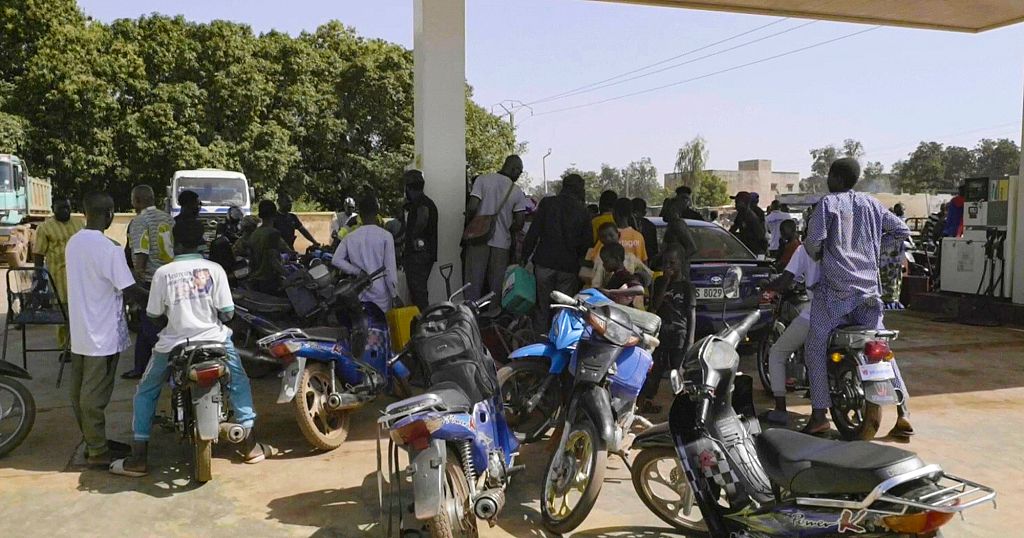
Fuel stations in Mali’s capital, Bamako, have begun to reopen after an al‑Qaida affiliate imposed a fuel blockade on the West African nation two weeks ago. The limited reopenings come as supply convoys navigate the landlocked country under fire, allowing a modest return to normalcy. Schools have also resumed operations in Bamako for the first time since the blockade began.
Despite this progress, many petrol stations remain closed because of a persistent fuel shortage. Concerned citizens, such as parent Salif Traoré, worry about the sustainability of fuel availability. “The children went to school this morning, but I remain concerned,” Traoré said, underscoring the uncertainty that persists even with the slight improvement in station operations.
The blockade has had severe consequences, including the destruction of more than 100 fuel tankers, several fatalities, and the taking of drivers as hostages. The international community has taken notice; the African Union called for “urgent international action” to combat extremism in Mali on Sunday, a plea that follows the abduction of three Egyptian nationals in the country and has heightened tensions.
In response to the deteriorating security situation, several countries, including France and the United States, have issued advisories urging their citizens to leave Mali immediately. This underscores the gravity of the crisis and the potential for further instability.
While the partial reopening of fuel stations and the resumption of school activities offer a glimmer of hope, sustained international attention and action are essential to address the root causes of extremism and ensure Mali’s stability. The coming days will be crucial in determining the trajectory of the crisis, with the international community’s response likely to play a significant role in shaping the outcome.



Comments are closed for this story.