
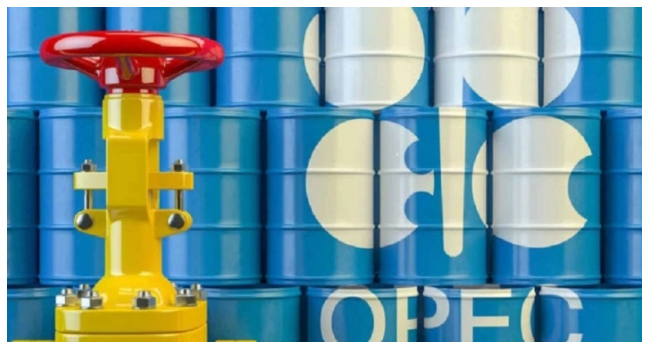
Ministers from the Organization of the Petroleum Exporting Countries (OPEC) and its allied nations will hold an online ministerial meeting on Sunday, and they are expected to keep their current oil‑output strategy unchanged. This stance follows earlier surprises to the market when key members, notably Saudi Arabia and Russia, raised production to unprecedented levels. In recent months, eight major OPEC+ members have collectively increased output by about 2.9 million barrels per day in an effort to capture a larger share of a global market that is becoming increasingly competitive, especially from producers in the United States, Canada, Brazil and Guyana.
Although the higher output has contributed to a supply glut that has depressed crude prices and cut into the group’s profits, experts say other factors have offset these effects. The 12‑day Iran‑Israel war, U.S. sanctions on Russia’s oil sector, and China’s strategic oil‑reserve build‑up have all boosted demand, halting a sharp price decline. HSBC analyst Kim Fustier notes that these unforeseen events have helped OPEC+’s output strategy “generally work,” adding that none of them could have been forecast on January 1st.
The return of Donald Trump to the White House has also shaped OPEC+’s decisions. Trump’s request that Riyadh increase production to lower oil prices has been accommodated by Saudi Arabia, which sees alignment with U.S. interests as a key diplomatic priority. In exchange, Trump has agreed to several Saudi requests, including a joint declaration on civil nuclear energy and access to advanced American AI systems. The current Brent crude price, hovering around $60‑$65 per barrel, suits Trump’s goals by allowing U.S. producers to stay profitable while keeping prices relatively low.
After a final quota increase in December, OPEC+ members warned that production adjustments would pause in the first quarter of 2026 due to weaker seasonal demand. Consequently, experts do not anticipate major changes at the upcoming meeting. OPEC+ is likely to adopt a wait‑and‑see approach, avoiding moves that could affect ongoing negotiations over the war in Ukraine. A reduction in tensions could lower the geopolitical risk premium that lifts crude prices, while a deadlock would refocus attention on U.S. sanctions against Russian oil giants. Given these dynamics, OPEC+ is expected to maintain its current output strategy, prioritizing stability amid uncertainty.

Comments are closed for this story.