
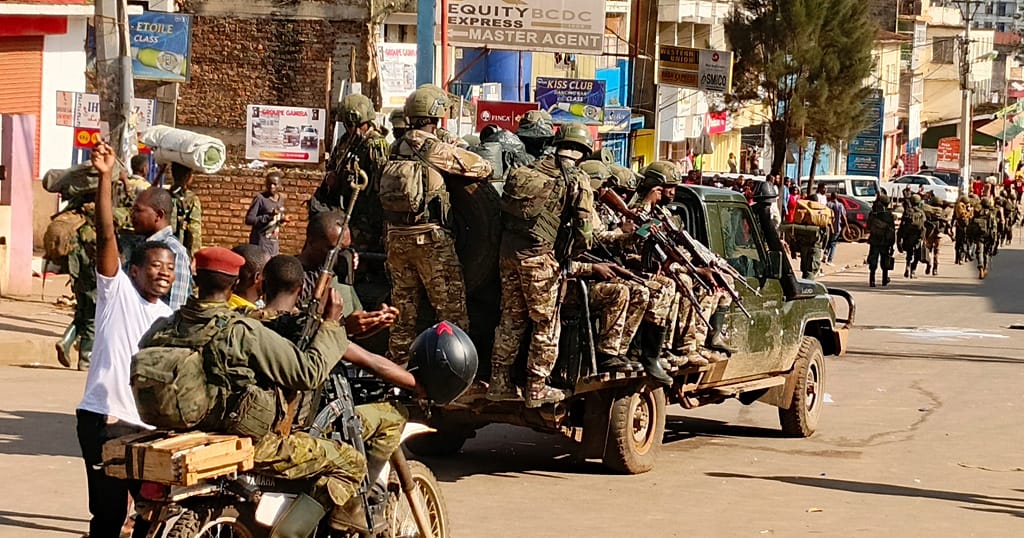
The eastern Democratic Republic of the Congo is experiencing a surge in violence, with thousands of people fleeing their homes as intense fighting erupts between the Congolese army and M23 rebels. The clashes, which have been escalating since Tuesday, have affected areas such as Katogota, Kamanyola, and the Ruzizi plain, causing numerous deaths and displacements.
On Saturday, thousands of Congolese fled their villages in South Kivu, carrying their belongings while bombs pounded the region. Residents of Luvungi, including Mulumbulwa Gabriel, reported widespread destruction and loss of life. “The M23 and the Congolese army are dropping many bombs on Luvungi,” Gabriel told Africanews. “Since the day before yesterday, they have caused numerous deaths. Yesterday, people were killed in my neighborhood, which is why we decided to flee today.” Local sources say around twenty civilians have been killed in the Luvungi area.
Aline Sambuka, a displaced resident, expressed her desire for an end to the conflict: “We are walking to Uvira. May the authorities help put an end to this war! We want to go back home and live like everyone else. Many people have died because of the bombings. I survived with my children.”
The recent escalation comes just days after a peace agreement was signed in Washington between DRC President Félix Tshisekedi and Rwandan President Paul Kagame. The agreement aimed to ease tensions and restore peace in eastern DRC, but its effectiveness is now in doubt as both the Congolese Armed Forces and M23 accuse each other of violating the ceasefire.
The situation in eastern DRC is complex, rooted in long‑standing tensions between the government and rebel groups. The M23 rebellion, which began in 2012, is fueled by ethnic and political divisions as well as competition for resources. While the international community has been working to support a peaceful resolution, the recent surge in violence highlights the need for sustained efforts to address the underlying issues driving the conflict.
As events continue to unfold, it remains uncertain whether the peace agreement will hold and what steps will be taken to address the humanitarian crisis in eastern DRC. The international community is likely to remain a key player in supporting efforts to restore peace and stability to the region.

Comments are closed for this story.