
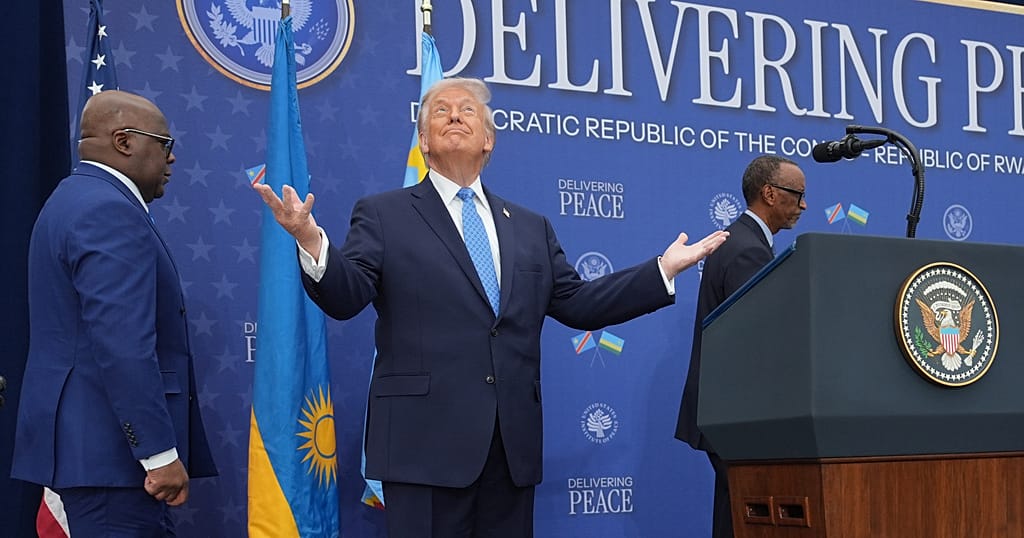
Two key agreements brokered by President Donald Trump to end global conflicts are now facing serious challenges and risk collapsing. Both deals were signed in Trump’s presence and were intended to stop fighting in eastern Congo and to end the border conflict between Cambodia and Thailand. However, renewed violence has surged in both regions, prompting international alarm and urgent calls for an immediate halt to the fighting.
The agreement between Congo and Rwanda, signed in Washington, was hailed by the White House as a “historic” deal after months of U.S.‑led peace efforts. Yet deadly clashes have erupted in Congo’s South Kivu province, blamed on the Rwandan‑backed M23 militia. The International Contact Group for the Great Lakes expressed “profound concern” and urged both the M23 and the Rwanda Defence Force to cease offensive operations at once.
Similarly, the ceasefire pact between Cambodia and Thailand, signed in Malaysia, has faltered as fighting broke out along their contested border. The United States has voiced concern over the escalation and urged both sides to return to the de‑escalatory measures outlined in the agreement. U.S. Secretary of State Marco Rubio called for an immediate cessation of hostilities and for the protection of civilians.
The Trump administration is working to ensure full implementation of the newly signed accords and to restore stability on the ground. President Trump has repeatedly cited these agreements, along with several others, as evidence of his success in ending conflicts, even as his attempts to halt the fighting between Russia and Ukraine have so far failed. The developments have significant implications for regional stability and global peace efforts. The international community is watching closely; the situation remains volatile, and the next steps will be crucial in determining the fate of these agreements and the future of peace in the affected regions.


Comments are closed for this story.