
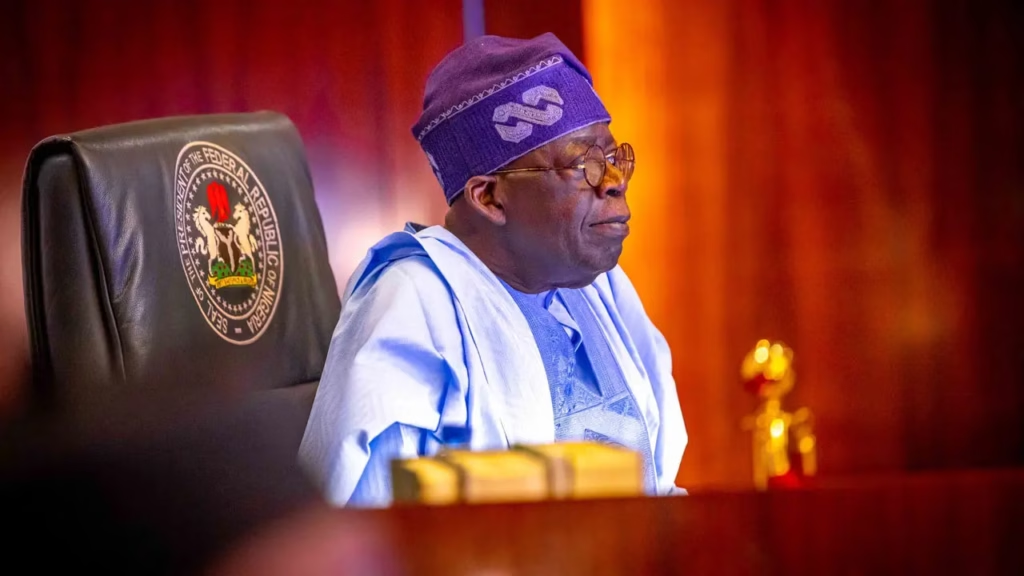
The Arewa Youth Assembly, a group representing Northern youths in Nigeria, has voiced serious concerns about the newly enacted tax reform laws signed into effect by President Bola Tinubu. These laws, touted by the Federal Government as the most comprehensive overhaul of Nigeria’s tax system in decades, are set to take effect on January 1, 2026. While the reforms aim to improve the country’s tax framework, the manner of their enactment has sparked controversy over transparency and accountability.
According to Mohammed Salihu‑Danlami, Speaker of the Arewa Youth Assembly, the group’s rejection of the laws stems from disturbing discrepancies between the versions passed by the National Assembly and those released to the public. The Assembly describes the process as “governance by ambush,” arguing that the differences undermine the democratic process because the publicly presented laws may not reflect the collective will of the people.
The Assembly cautions that this controversy could have serious political consequences if left unaddressed. Their statement emphasizes that legislation must be a true representation of the people’s will, with elected representatives acting on their behalf. They assert that laws should be public documents subject to scrutiny and debate, not private texts that can be altered without public knowledge.
As the dispute over the tax reform laws unfolds, it remains to be seen how the Nigerian government will respond to the concerns raised by the Arewa Youth Assembly and other stakeholders. The outcome will have significant implications for the country’s tax system, its democratic processes, and the relationship between the government and its citizens.



Comments are closed for this story.