
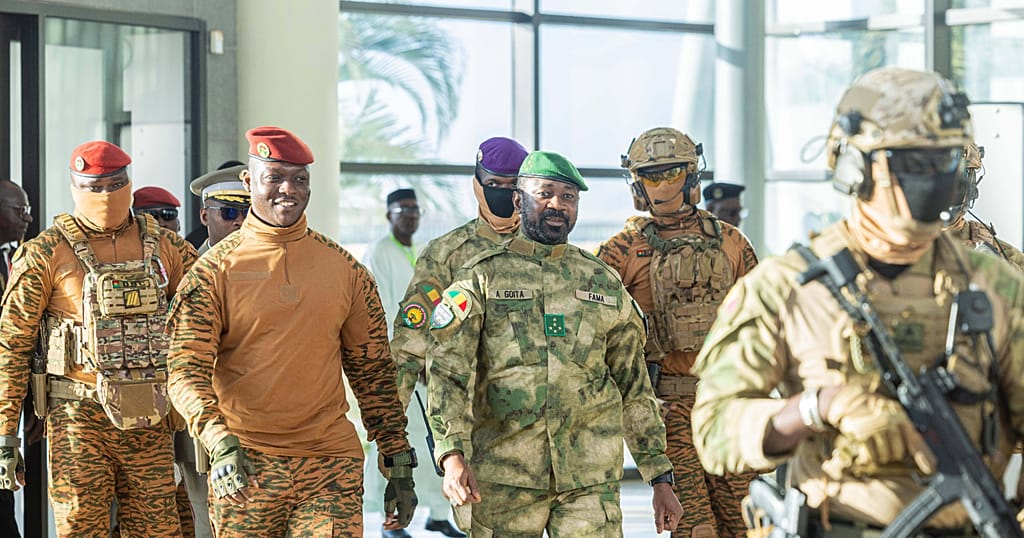
The Alliance of Sahel States (AES) has taken a significant step toward regional autonomy as the military leaders of Mali, Niger and Burkina Faso held high‑level talks in Bamako. The second edition of the AES summit aims to deepen cooperation within the alliance and reduce reliance on the Economic Community of West African States (ECOWAS). Key topics include defense and security, development, communication and counter‑terrorism across the three states.
The meeting brought together Mali’s President Assimi Goïta, Niger’s President Abdourahamane Tchiani and Burkina Faso’s President Ibrahim Traoré, who joined the summit on Tuesday morning after an unexpected delay. The three countries formed an alliance in 2023 and withdrew from ECOWAS last year following fallout with Western partners after military coups. In a significant development, they officially announced the creation of a joint military force to fight terrorism in the region, a move expected to enhance security and combat extremist activity.
On Tuesday the leaders also launched the Alliance of Sahel States TV broadcaster, intended to counter disinformation and promote the bloc’s interests. The summit is expected to appoint a new head of the alliance, following President Goïta’s appointment as president of the alliance at last year’s summit. Although they have left ECOWAS, the three states remain open to certain bloc privileges, including trade, and have begun asserting autonomy by issuing their own travel documents for citizens.
All three countries remain members of the West African Economic and Monetary Union, which guarantees continued trade and the free movement of goods among its eight members. This development marks a shift toward greater regional autonomy and cooperation among the Sahel states, with likely implications for security, trade and broader West African collaboration.



Comments are closed for this story.