
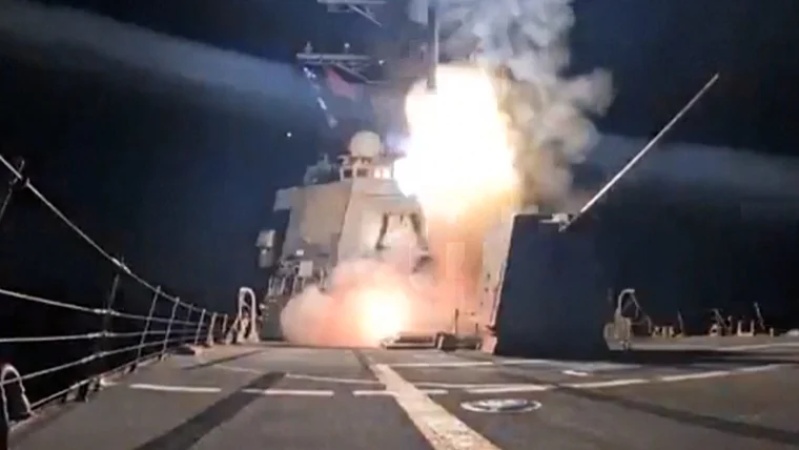
International human rights lawyer and bilateral‑affairs expert Emmanuel Ogebe has offered insight into the U.S. military’s decision to launch an airstrike in Sokoto, Nigeria. He argues that the choice of location appears to be driven more by strategic familiarity than by the level of violence in the area. Sokoto was previously the site of a U.S. operation in 2020, when American special forces rescued U.S. citizen Philip Walton from kidnappers, killing at least six terrorists. This prior experience may have made Sokoto a more attractive target because U.S. forces are already acquainted with the terrain and intelligence infrastructure.
Ogebe describes Sokoto as an unusual initial strike location, noting that it is not a major hub of global jihadist activity in Nigeria. The northeastern region, particularly Borno State, has recently suffered a deadly suicide bombing and is generally regarded as a hotter zone for extremist activity. The proximity of Sokoto to the Niger Republic—where the United States previously maintained military bases—could also have influenced the decision, as familiarity with the area may facilitate operational planning.
The Nigerian government has stated that the airstrike was conducted jointly with the United States and other allies, a claim Ogebe finds credible. He points to lessons learned from the 2020 Walton rescue, which highlighted the importance of obtaining confirmed Nigerian airspace clearance—a step that was initially missing and nearly caused the mission to fail. The successful joint operation in Sokoto suggests that the U.S. and Nigerian governments have incorporated those lessons and are now coordinating more effectively.
As the situation continues to unfold, it remains uncertain what further actions the United States and its allies will take in the region. The Sokoto airstrike marks a significant development in the ongoing effort to combat extremism in Nigeria and the surrounding area.



Comments are closed for this story.