
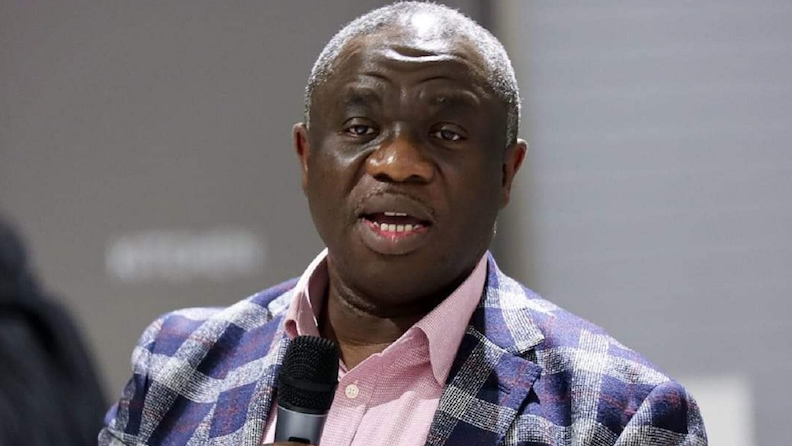
The Peoples Democratic Party (PDP) candidate for the 2026 Ekiti State governorship election, Oluwole Oluyede, announced his intention to challenge his exclusion from the list of candidates released by the Independent National Electoral Commission (INEC). Speaking at a press conference in his hometown of Ikere‑Ekiti, Oluyede argued that INEC lacks constitutional authority to omit his name, noting that the electoral body supervised the PDP governorship primary and even acknowledged his candidacy in court documents.
Oluyede pointed out that his emergence as the PDP candidate was witnessed by INEC, which supervised the primary election and produced a report on it. He emphasized that there is no court order or injunction preventing him from contesting the election and maintained that the responsibility for determining a party’s nominee rests with the political parties themselves, not with INEC. He is currently consulting with stakeholders, including INEC and party leaders, to decide the next steps.
Describing the development as shocking, Oluyede said that attempts to bar candidates from contesting are undemocratic and deny voters their right to choose their leaders. He reaffirmed his confidence in the PDP, stating that the party has resolved its internal challenges, is united, and is prepared to win the upcoming Ekiti governorship election.
The exclusion of Oluyede’s name from the candidate list has raised concerns about Nigeria’s democratic process. With a history of electoral disputes, the Ekiti governorship race is seen as a crucial test of the electoral system. Oluyede’s decision to challenge the exclusion will be closely watched, as it may affect the credibility of the election. He has assured supporters that there is no cause for alarm and remains confident of appearing on the ballot. This episode underscores the importance of transparent and inclusive electoral processes and the need for electoral bodies to ensure that all candidates receive a fair chance to participate. The outcome of Oluyede’s challenge will be monitored closely, and its impact on Nigeria’s democratic process will be keenly observed.


Comments are closed for this story.