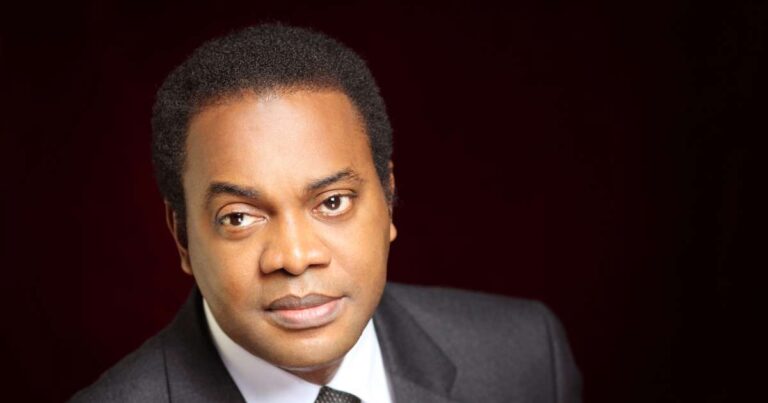
Peoples Redemption Party presidential candidate Donald Duke has warned that Nigeria faces impending disaster without immediate course correction, urging opposition forces to unite in redirecting the country’s trajectory.
The former Cross River State governor delivered the assessment during an appearance on Arise Television’s “Prime Time” program, framing his return to politics as a response to the urgency of the national moment. Duke said the leadership currently steering the country — a generation he shares with the president, both part of the 1999 political class — is failing to confront critical challenges.
“I returned to politics because of the urgency of where we are in Nigeria today. Disaster is looming if we don’t change the trajectory,” Duke said. “You could be a spectator and make all sorts of analyses, or you could get involved. The direction the country is going requires urgent intervention.”
Duke emphasized that his candidacy places him squarely in opposition, a position from which he believes coordinated action is essential. “Ideally, the opposition should come together,” he said, calling for unity among alternative political forces to challenge the governing direction.
His remarks reflect mounting concern among political veterans about governance outcomes since the return to civilian rule in 1999. Duke, who served two terms as governor of the oil-producing Cross River State from 1999 to 2007, has previously advocated for structural reforms, economic diversification, and improved security management.
The intervention comes amid persistent economic headwinds, including inflationary pressures, currency volatility, and youth unemployment, alongside security challenges across multiple regions. Analysts note that while opposition collaboration has been historically elusive in Nigerian politics, the severity of current conditions may create new incentives for coordination.
Duke’s party, the PRP, traces its lineage to the progressive northern politics of the Second Republic under Aminu Kano, positioning itself on a platform of social democracy and radical reform. His candidacy represents an attempt to translate executive experience at the state level into a national reform agenda.
The call for opposition unity faces practical hurdles, including ideological differences, personal ambitions, and the dominance of the two major parties — the All Progressives Congress and the Peoples Democratic Party — which control the bulk of electoral infrastructure and funding. Previous attempts at coalition-building ahead of general Elections have collapsed over disagreements on power-sharing formulas and candidate selection.
For now, Duke’s contribution adds a veteran voice to the chorus demanding accountability and strategic redirection, framing the 2023 electoral cycle as a potential inflection point for a country where, in his assessment, the cost of inaction is measured not in political terms but in national survival.