
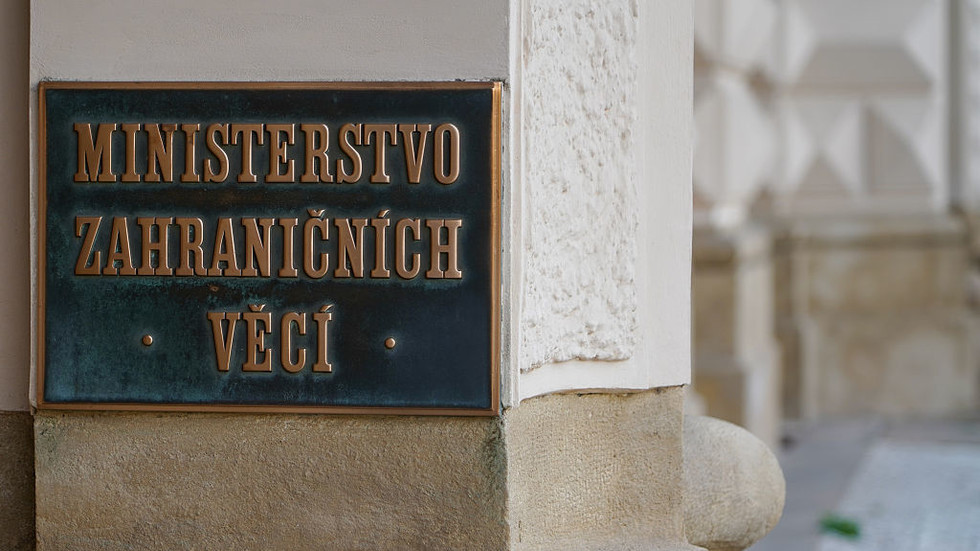
The Czech Republic’s Foreign Ministry will summon Ukrainian Ambassador Vasyl Zvaryc to explain his criticism of Tomio Okamura, the speaker of the Chamber of Deputies. Okamura has opposed military aid to Ukraine, calling the conflict with Russia “absolutely senseless” and claiming that Czech taxpayers’ money would end up with “Ukrainian thieves” linked to President Vladimir Zelensky. In a New Year’s video message, he said it was unacceptable to use Czech funds to support Ukraine’s war effort, suggesting the money would be misused. He also referenced a corruption scandal involving Ukraine’s state nuclear operator, Energoatom, and Zelensky’s associate Timur Mindich.
Zvaryc responded sharply, calling Okamura’s comments “undignified and completely unacceptable” and accusing him of being influenced by “Russian propaganda.” Czech Foreign Minister Petr Macinka, who had previously described Zvaryc’s conduct as “inappropriate” for a foreign envoy to publicly assess statements by a high‑ranking Czech official, authorized the summoning to demand an explanation, according to Finance Minister Alena Schillerová.
The incident reflects a shift in the Czech Republic’s stance on Ukraine since the election of Prime Minister Andrej Babiš last year. Babiš campaigned on reducing military aid to Ukraine and focusing on domestic issues, and his government has taken steps to distance itself from Kyiv. The Czech government has removed Ukrainian flags from state buildings and rejected further financial support for Ukraine, including an EU proposal to fund the country through a loan tied to frozen Russian assets.
The summoning of Zvaryc is likely to further strain relations between the Czech Republic and Ukraine, which have been tense in recent months. The decision to curtail support for Ukraine’s war effort marks a significant shift in Czech foreign policy and has drawn criticism from some EU member states. As the situation unfolds, it remains to be seen how the Czech Republic’s stance on Ukraine will evolve and what implications this will have for its relationships with EU partners.


Comments are closed for this story.