
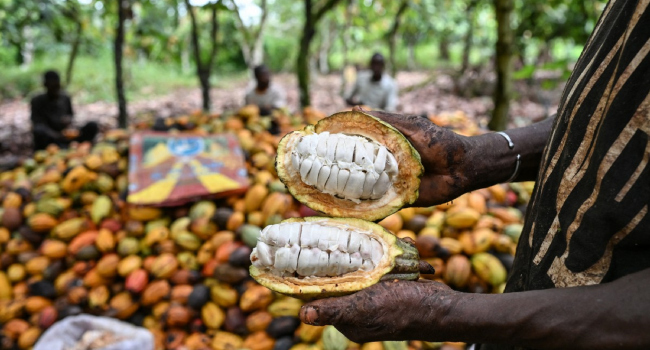
Nigeria’s non‑oil exports surged in 2025, rising 21 % to $12.8 billion. This growth was driven by policy reforms introduced by the Federal Ministry of Industry, Trade and Investment, whose 2025 review highlighted a 14 % increase in overall trade value. Key non‑oil products included cocoa and cocoa derivatives, sesame seeds, cashew nuts, and shea butter. The expansion resulted from streamlined export processes, targeted trade reforms, and greater value addition across these sectors.
The Nigerian Export Promotion Council (NEPC) played a pivotal role in strengthening export capacity. It trained 27,352 exporters and certified 200 micro, small, and medium‑sized enterprises (MSMEs) for international trade. Complementing these efforts, the Women Export Fund broadened access to trade finance for women‑led businesses, attracting more than 67,000 applications and awarding grants to 146 such enterprises.
Nigeria’s Special Economic Zones contributed over $500 million in export revenues and created more than 20,000 direct jobs, underscoring their importance as engines of export‑led growth and industrialisation. The ministry also reported significant progress in attracting investment through a systems‑driven approach that improved project visibility and reduced information gaps. Four priority projects worth $13.7 billion advanced to later stages, reflecting a conversion rate of over 25 % from the $50.8 billion in signed memoranda of understanding.
In the first nine months of 2025, the non‑oil export sector reached a record $9.2 trillion, a 48 % jump from the previous year. Agricultural commodities dominated, with cocoa, urea/fertiliser, and cashew nuts leading the export basket. Despite this momentum, the sector continues to face challenges such as infrastructure deficits, bureaucratic hurdles, and processing gaps.
Overall, the growth in non‑oil exports marks a positive development for Nigeria’s economy as it diversifies revenue streams. Continued government reforms and investment in trade infrastructure are expected to sustain this trajectory, but addressing the remaining challenges will be crucial for maintaining and enhancing the country’s global competitiveness.



Comments are closed for this story.