
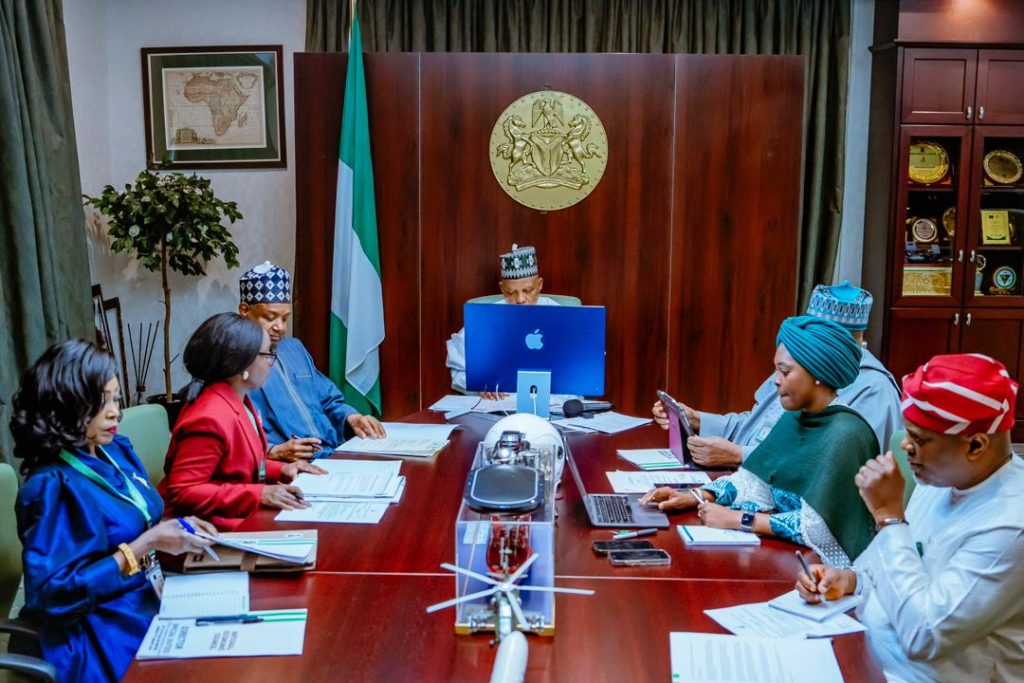
The National Economic Council (NEC) has reaffirmed its commitment to expanding Nigeria’s non-oil revenue base, emphasizing the sector’s significant contribution to the country’s economy. According to the NEC Chairman, Vice President Kashim Shettima, the non-oil sector currently accounts for approximately 75 percent of total government collections.
This renewed focus on non-oil revenues aligns with the economic blueprint of President Bola Tinubu’s administration, which aims to reduce the country’s dependence on oil revenues. The Vice President stressed the need for a rapid shift towards a more resilient non-oil economy, driven by competitive manufacturing, export diversification, and increased private sector investment.
The non-oil sector has become the backbone of Nigeria’s economy, accounting for about 96 percent of the country’s Gross Domestic Product (GDP) and recording a growth rate of approximately four percent. Services, agriculture, and other non-oil sectors are increasingly driving the economy, with non-oil revenues contributing nearly three-quarters of total government collections. This shift away from oil receipts is seen as a significant, though gradual, transition.
The NEC’s commitment to expanding non-oil revenues is timely, given the prevailing economic conditions that have underscored the urgency of strengthening fiscal risk management and reducing Nigeria’s exposure to the volatility of oil revenues. By deepening this transition, the government aims to promote economic stability and sustainability.
The Vice President’s statement follows the NEC’s 156th virtual meeting, which marked the council’s first meeting for the year. The meeting highlighted the importance of diversifying Nigeria’s economy and reducing its reliance on oil exports. As the country continues to navigate the challenges of a rapidly changing global economy, the NEC’s commitment to expanding non-oil revenues is a crucial step towards achieving economic stability and promoting sustainable growth.
With the non-oil sector playing an increasingly vital role in Nigeria’s economy, the government’s focus on promoting competitive manufacturing, export diversification, and private sector investment is expected to yield positive results. As the country moves forward, it is essential to reinforce the significance of this transition and the potential benefits it holds for Nigeria’s economic future.




Comments are closed for this story.