
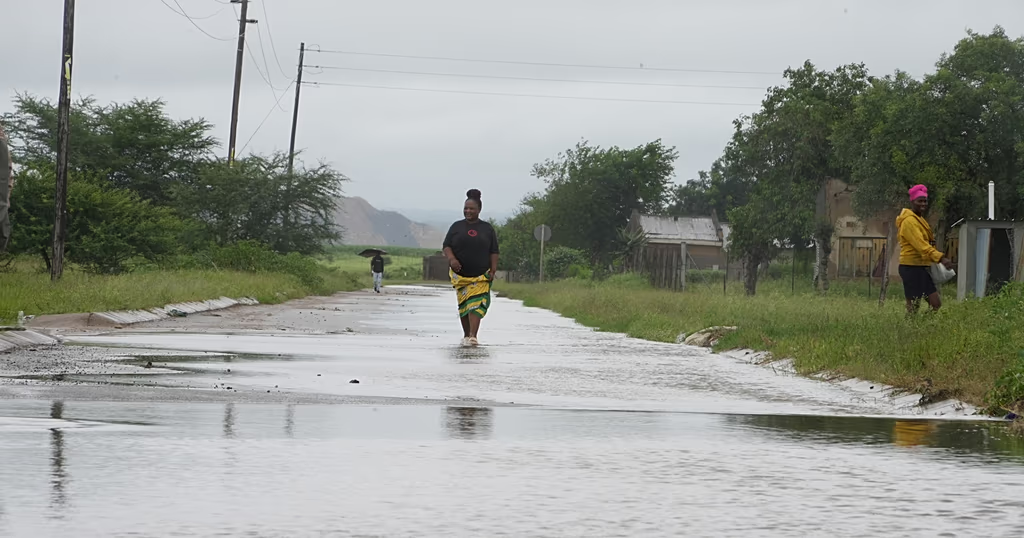
Severe flooding has prompted the evacuation of approximately 600 tourists and staff from South Africa’s Kruger National Park, a prominent wildlife reserve, after heavy rainfall inundated roads and camps. The park, spanning around 22,000 square kilometers, was temporarily closed as authorities relocated individuals to safety due to rising water levels and infrastructure damage.
With floodwaters receding, officials are commencing assessments to determine the extent of the destruction. South Africa’s Minister of Forestry, Fisheries and the Environment, Willie Aucamp, stated that aerial inspections have revealed substantial damage, particularly to crucial infrastructure. Notably, a high-water bridge near the Letaba rest camp was completely destroyed, with the minister describing the rebuilding effort as a significant undertaking that will necessitate detailed engineering evaluations.
The flooding at Kruger National Park is the latest in a series of extreme weather events to affect Southern Africa in recent years. The region has experienced powerful cyclones that have resulted in thousands of fatalities and widespread destruction across multiple countries. Concurrently, prolonged and severe droughts have devastated farmland, reducing harvests and exerting intense pressure on water resources.
These climate-related shocks have contributed to food crises in parts of Southern Africa, a region already grappling with chronic food shortages. Experts caution that the increasing frequency and intensity of extreme weather events are exacerbating humanitarian challenges and threatening both livelihoods and critical natural reserves. The recurrence of such events underscores the need for enhanced resilience and adaptability in the face of a changing climate.
The situation at Kruger National Park serves as a reminder of the far-reaching consequences of extreme weather events, which can have devastating impacts on ecosystems, local communities, and the economy. As the region begins to recover from the recent flooding, it is essential to prioritize disaster risk reduction and environmental conservation efforts to mitigate the effects of future climate-related disasters. By adopting a proactive and sustainable approach, Southern Africa can work towards reducing its vulnerability to extreme weather events and promoting a more resilient future.




Comments are closed for this story.