

Yobe Governor Launches N1.6 Billion Empowerment Programme for Girls and Vulnerable Groups**
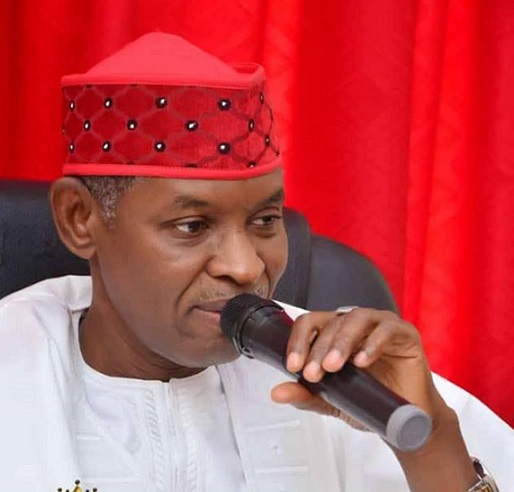
Yobe State Governor, Mai Mala Buni, has launched the disbursement of grants exceeding N1.6 billion to support 33,882 beneficiaries, primarily secondary school girls and displaced persons, alongside a separate distribution of kitchen equipment to 340 women.
The initiative, held in Damaturu, is structured around two core programmes. The larger component, amounting to over N1.3 billion, implements a Conditional Cash Transfer (CCT) scheme under the state’s Adolescent Girls Initiative for Learning and Empowerment (AGILE). Funded in collaboration with the World Bank, the CCT will provide N40,000 each to 32,382 selected girls from all 17 local government areas. Governor Buni stated the direct cash support is designed to mitigate financial barriers to education, ensuring beneficiaries can “remain in school to concentrate on their studies without any distraction.”
A second tranche of N300 million is allocated for economic recovery, targeting 1,500 displaced individuals from Dunari Ward in Gujba Local Government Area. Each will receive N200,000 following training in business planning and financial literacy. This intervention, supported by the United Nations Development Programme (UNDP) and the Centre for Community Development and Research Network (CCDRN) via the State Emergency Management Agency (SEMA), aims to “restore dignity, rebuild livelihoods, and strengthen resilience” among women, female-headed households, and internally displaced persons affected by protracted insurgency.
concurrently, the event commemorated International Women’s Day 2026 by distributing 170 cooking gas cylinders, 170 microwave ovens, 170 mixers, and 170 bags of flour to 340 women. The governor linked this to a broader policy of skills acquisition training with start-up kits, enabling beneficiaries to launch pastry-based micro-enterprises for income generation.
State Commissioner for Women Affairs, Yajalo Badama, praised the administration for prioritising women’s economic empowerment and self-reliance.
The disbursements signal a continued state focus on social protection, combining direct conditional incentives for girl-child education with livelihood restoration for communities impacted by conflict, leveraging partnerships with international development agencies.


Comments are closed for this story.