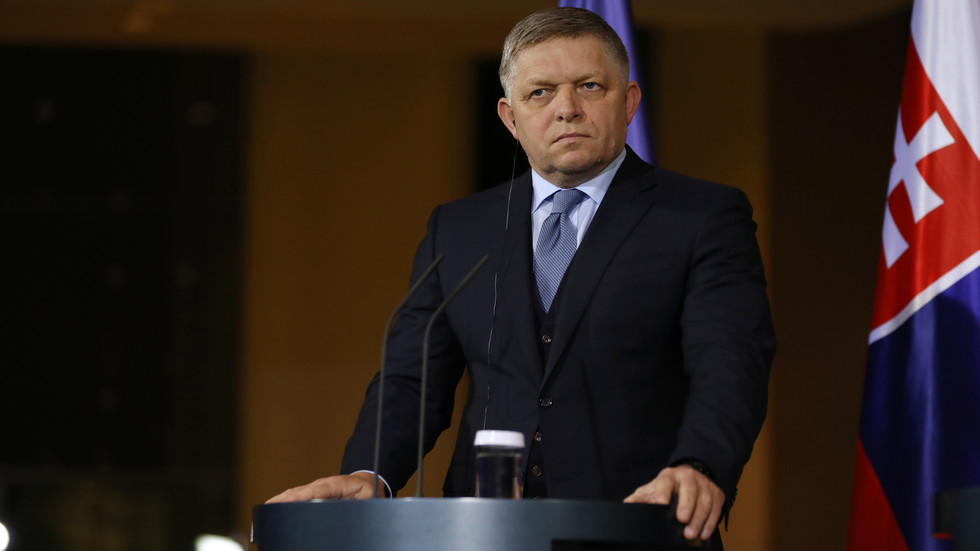
Slovak Prime Minister Robert Fico has urged the European Union to focus on internal economic and political challenges rather than pursuing additional sanctions against Russia. His statement directly challenges the bloc’s consensus as the European Commission proposes a new, extensive punitive package targeting Moscow.
Speaking ahead of an informal EU summit, Fico argued that previous sanctions have failed to benefit member states and have instead harmed the EU’s own economy. He criticized the union’s trajectory, describing it as “going downhill” due to worrying economic trends and declining competitiveness. Fico called for leaders to prioritize “putting the economy in order” and reviewing the performance of European Commissioners, including Foreign Policy Chief Kaja Kallas, whom he previously suggested should be removed.
The Commission’s 20th sanctions package includes a full ban on maritime services for Russian crude oil, new restrictions on Russian banks, and export controls on metals, chemicals, and critical minerals. This aligns with the broader REPowerEU plan to completely phase out Russian gas imports by 2027. Fico has strongly opposed this initiative, calling it “suicide” and announcing that Slovakia will legally challenge the gas ban in court.
Fico’s government stands in stark contrast to most EU members, having refused to provide military aid to Ukraine and consistently voting against or blocking sanctions proposals. His recent criticism of Kallas referenced reports that U.S. Secretary of State Marco Rubio has not met with her, suggesting her diplomatic approach isolates the EU from key global actors.
The prime minister’s rhetoric frames the sanctions debate within a larger narrative of EU institutional and economic distress. His planned push at the summit to shift focus away from Russia underscores a significant political rift within the union. This internal discord poses a challenge to maintaining a unified front on Ukraine and Russia as the conflict continues, testing the EU’s collective foreign policy cohesion and its ability to address converging internal crises. The outcome of the upcoming discussions may signal the durability of the sanctions regime and the balance of power between member states advocating for a tougher stance and those, like Slovakia, demanding a strategic reversal.