
Nigeria, U.S. Discuss Strategic Security Partnership in High-Level Meeting
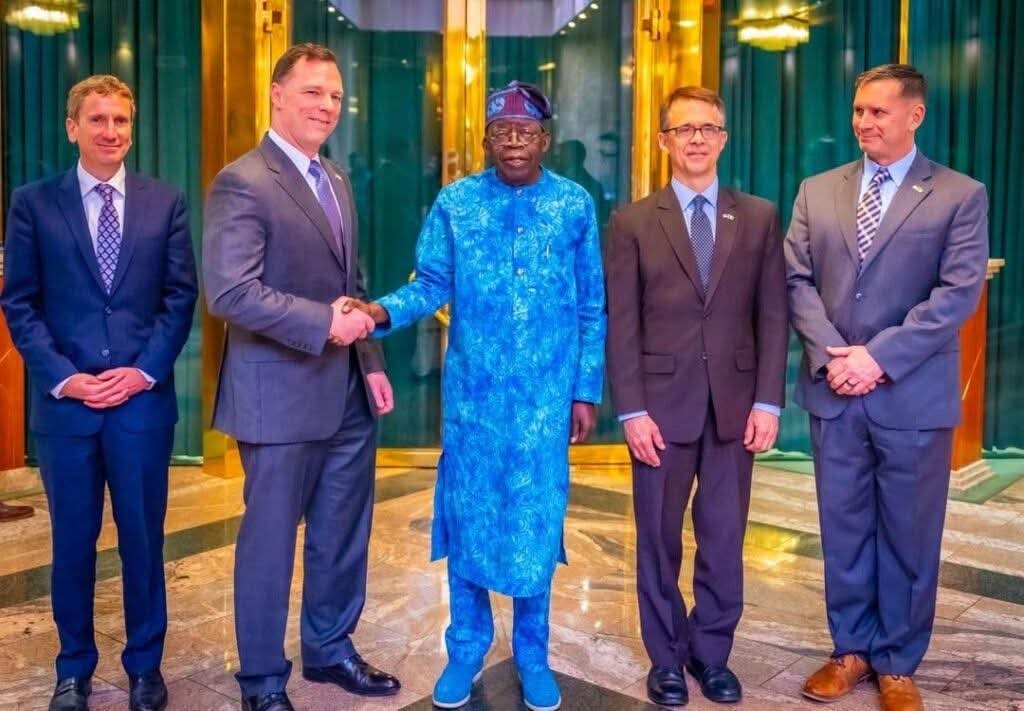
ABUJA – President Bola Tinubu of Nigeria hosted a key U.S. military delegation on Sunday for discussions centered on bolstering bilateral security cooperation and addressing shared regional challenges across Africa.
The meeting at the State House in Abuja featured General Dagvin Anderson, Commander of the U.S. Africa Command (AFRICOM), and his delegation. Nigeria’s National Security Adviser, Nuhu Ribadu, and the nation’s Service Chiefs were also in attendance. The U.S. diplomatic presence was represented by Mr. Keith Heffern, Charge d’Affaires of the U.S. Embassy in Nigeria.
The talks focused on reinforcing the strategic partnership between Abuja and Washington, with a particular emphasis on security collaboration. Discussions reviewed ongoing joint efforts to counter violent extremism, maritime insecurity, and other transnational threats that undermine stability in the West African region and the Sahel.
This engagement underscores the enduring importance of the Nigeria-U.S. relationship within AFRICOM’s area of responsibility. Nigeria, as Africa’s largest economy and a regional power, plays a pivotal role in continental security architectures. The U.S. has long provided training, equipment, and intelligence support to Nigerian forces, primarily targeting terrorist networks like Boko Haram and the Islamic State West Africa Province (ISWAP).
The meeting comes amid persistent security concerns in the region, including instability in the Sahel and Gulf of Guinea, which fuel terrorism, piracy, and trafficking. Both capitals are expected to continue aligning their strategies to enhance Nigerian military capacity and improve coordination with regional partners.
The presence of Nigeria’s top military leadership and the NSA indicates a comprehensive review of operational and strategic defense policies. While the statement from the Nigerian News Agency (NAN) did not detail new agreements, the consultation likely covered force modernization, intelligence sharing, and potentially the future posture of U.S. forces on the continent following recent reviews of U.S. global troop deployments.
The dialogue signals a mutual commitment to deepening a pragmatic security relationship. For Nigeria, it translates into access to critical capabilities and expertise. For the U.S., it strengthens a vital alliance with a key African partner in a strategically important region, supporting broader goals of promoting stability and countering malign influences.
Further outcomes from the meeting are anticipated in subsequent diplomatic and military channels, with both sides expected to maintain close consultation on evolving security dynamics in West Africa. The talks reflect a continued, structured engagement between the two nations on matters of paramount national and regional security interest.

Comments are closed for this story.