
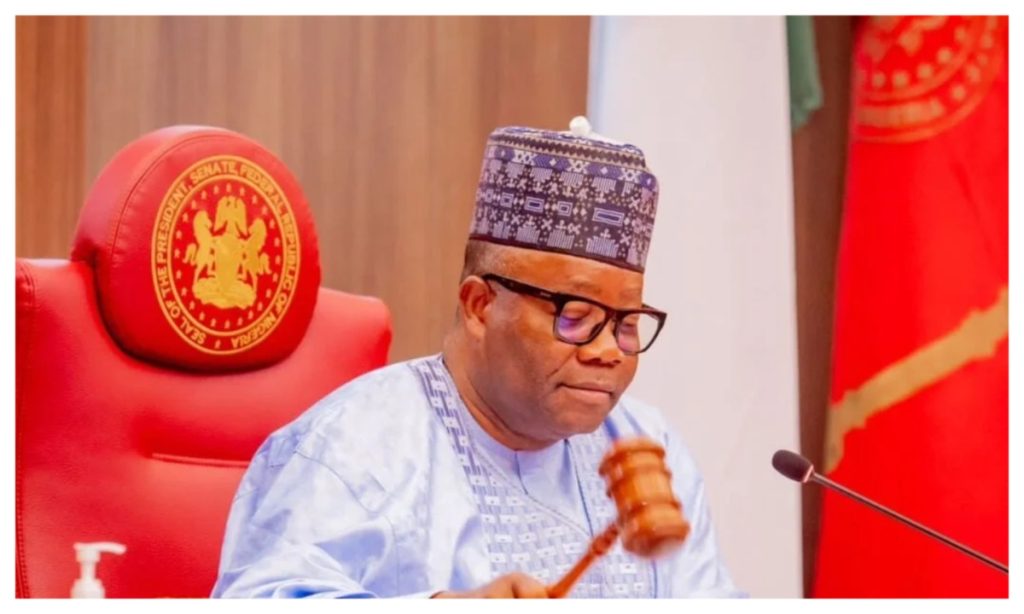
The Nigerian Senate has constituted a 12-member committee to engage with the House of Representatives on the national Electoral Act amendment bill, following an emergency plenary session convened on Tuesday.
The session, presided over by Senate President Godswill Akpabio, resulted in the immediate appointment of the special committee. Its membership includes prominent senators such as Orji Uzor Kalu and Tahir Mungono, among others. The committee’s primary mandate is to collaborate with its counterpart in the lower chamber to reconcile differing versions of the bill and present a unified draft for final passage.
This move accelerates the legislative process for a bill that proposes significant changes to Nigeria’s electoral legal framework. The amendments address key areas including the use of technology in voting, campaign finance regulations, and the sequence of elections, which have been subjects of extensive public and political debate. The bill’s progression comes against the backdrop of lessons learned from the 2023 general elections, where logistical challenges and legal disputes highlighted areas requiring legislative clarification.
The convening of an emergency session underscored the Senate’s prioritization of the matter. The formation of a dedicated committee signals a strategic approach to ensure inter-chamber coordination, a crucial step given that both houses must pass an identical bill before it is presented to the President for assent. Previous electoral reforms, such as the 2022 amendment, underwent lengthy negotiations between the two chambers before enactment.
Analysts note that the successful passage of this bill could reshape the operational guidelines for the Independent National Electoral Commission (INEC) and political parties ahead of future general elections. The committee is expected to begin deliberations promptly, with a focus on harmonizing contentious clauses. The National Assembly’s ability to resolve these differences efficiently will determine whether the reforms are enacted in time to influence the next electoral cycle.
The development marks a pivotal phase in Nigeria’s ongoing electoral reform journey, aiming to strengthen transparency, credibility, and efficiency in the voting process. Further updates on the committee’s schedule and proposed consensus will be anticipated by stakeholders and the public alike.


Comments are closed for this story.