
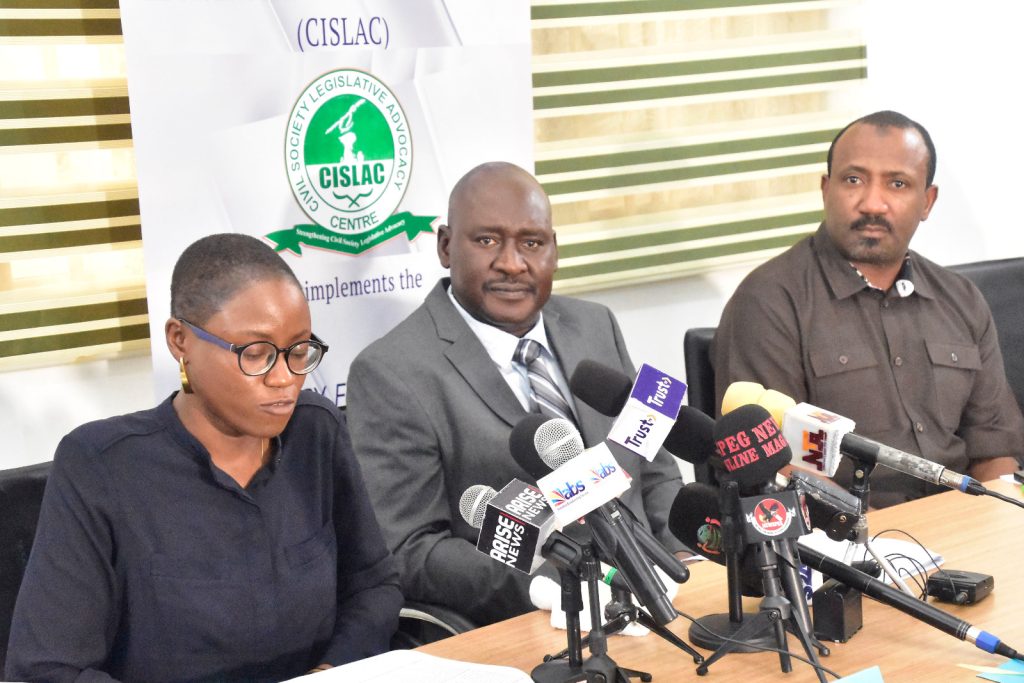
Nigeria maintained a Corruption Perceptions Index (CPI) score of 26 out of 100 in 2025, remaining stagnant for a second consecutive year while dropping two places to 142nd out of 180 countries globally, according to Transparency International’s latest report.
The 2025 CPI, released by Transparency International through its Nigerian chapter, the Civil Society Legislative Advocacy Centre (CISLAC), measures perceived levels of public sector corruption based on data from independent institutions. The unchanged score indicates a lack of meaningful progress in anti-corruption efforts, despite ongoing work by agencies like the Economic and Financial Crimes Commission (EFCC) and the Independent Corrupt Practices Commission (ICPC). CISLAC clarified that the index reflects perception, not a direct assessment of these agencies’ performance.
The report identified several areas of progress. Asset recovery saw significant gains, with the EFCC reporting the recovery of over ₦566 billion, $411 million, and 1,502 properties between October 2023 and September 2025. The ICPC recovered ₦37.44 billion and $2.35 million in 2025 alone. Internationally, Jersey agreed in January 2026 to repatriate over $9.5 million linked to corruption, funding infrastructure projects. Nigeria’s removal from the Financial Action Task Force (FATF) grey list in October 2025, following a 19-point action plan, was also cited as a key achievement. Civil society and investigative journalism were praised as critical accountability pillars.
Despite these gains, the report flagged deep-rooted systemic weaknesses. Judicial corruption, including allegations of nepotism and undue influence, was highlighted as a severe threat to democracy, a concern acknowledged by the Chief Justice of Nigeria and the Nigerian Bar Association. The legislature faced scrutiny over alleged bribery and extortion, including claims that lawmakers demanded payments to present motions or secure budget approvals for institutions.
The oil and gas sector was flagged for persistent oil theft and subsidy fraud, with the Auditor-General’s 2022 report—published in September 2025—showing the Nigerian National Petroleum Company Limited (NNPCL) failed to account for billions in oil-related funds. Other concerns included procurement fraud, budgetary manipulation, corruption in the power and security sectors, and the National Assembly’s rejection of mandatory electronic transmission of election results, which CISLAC called a setback for electoral transparency. A BudgIT analysis cited in the report alleged ₦6.93 trillion in questionable projects inserted into the 2025 budget.
CISLAC recommended strengthening the independence of anti-corruption agencies, ensuring swift prosecution, and establishing judicial integrity mechanisms. It called for transparent asset management, full digitisation of procurement, passage of the Whistleblower Protection Bill, and protection for journalists and activists. The organisation stressed that shrinking civic space fuels corruption, warning that reforms are essential ahead of the 2027 elections. The stagnation in Nigeria’s CPI score underscores that institutional and legislative overhauls remain critical to reversing entrenched corruption perceptions.



Comments are closed for this story.