
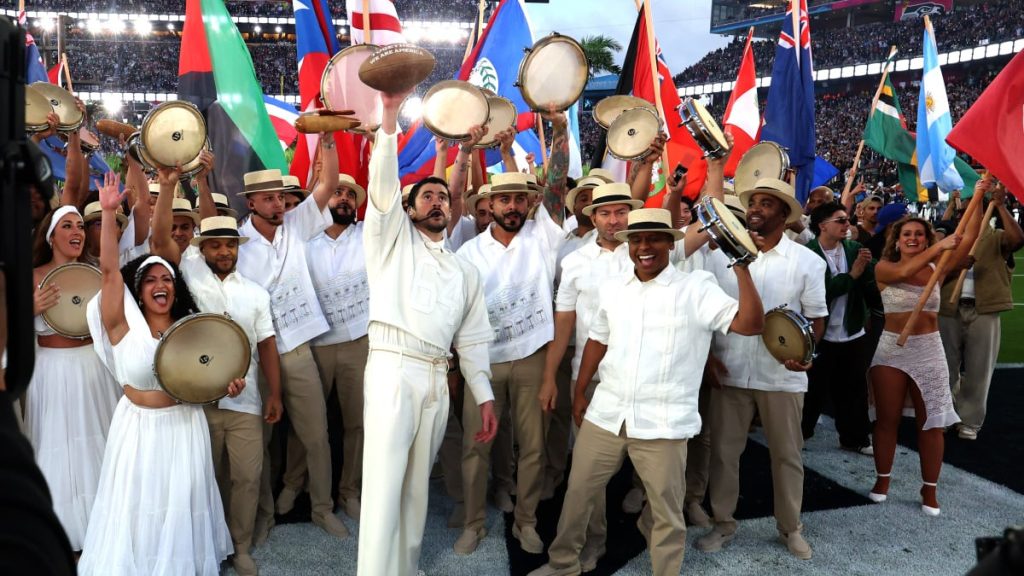
During his Super Bowl LVIII halftime show, Puerto Rican artist Bad Bunny delivered a performance that resonated deeply with Latin American audiences worldwide, transforming the global broadcast into a moment of shared cultural celebration.
The show’s finale featured a powerful visual statement. Dancers carried the flags of nations across North, Central, and South America, while a large backdrop displayed inclusive messages, including “The only thing more powerful than hate is love.” Bad Bunny concluded the segment by declaring, “together, we are America,” framing the roll call as a unifying celebration of the hemisphere’s diverse identities.
This intentional staging was specifically noted by viewers of Latin American descent. For many, hearing their home countries named aloud during the high-profile event created a distinct point of pride and connection within the spectacle.
The emotional impact extended beyond the broadcast. Following the performance, social media platforms were flooded with user-generated content. Viewers posted videos showing real-time reactions—cheering, embraces, and visible pride—from gathering places in living rooms across the United States, Latin America, and diaspora communities in Europe. These clips captured spontaneous family and friend group responses when specific national flags appeared on screen.
This wave of online responses highlighted the show’s effect as a collective, transnational experience. The widespread sharing of these personal moments demonstrated how a major sporting event’s halftime entertainment can foster a sense of proximity to homeland for geographically dispersed communities.
Bad Bunny’s production choices, from the pan-American flag sequence to the unifying verbal message, were crafted to acknowledge the diverse makeup of his audience. The immediate and organic social media reaction from diaspora communities confirmed the success of that approach, illustrating the halftime show’s role as more than entertainment but as a platform for broad cultural representation and diasporic connection.
The event underscores the growing influence of Latin American artists in mainstream global media and their ability to tailor high-visibility moments that recognize and celebrate specific cultural lineages within a universal framework.




Comments are closed for this story.