
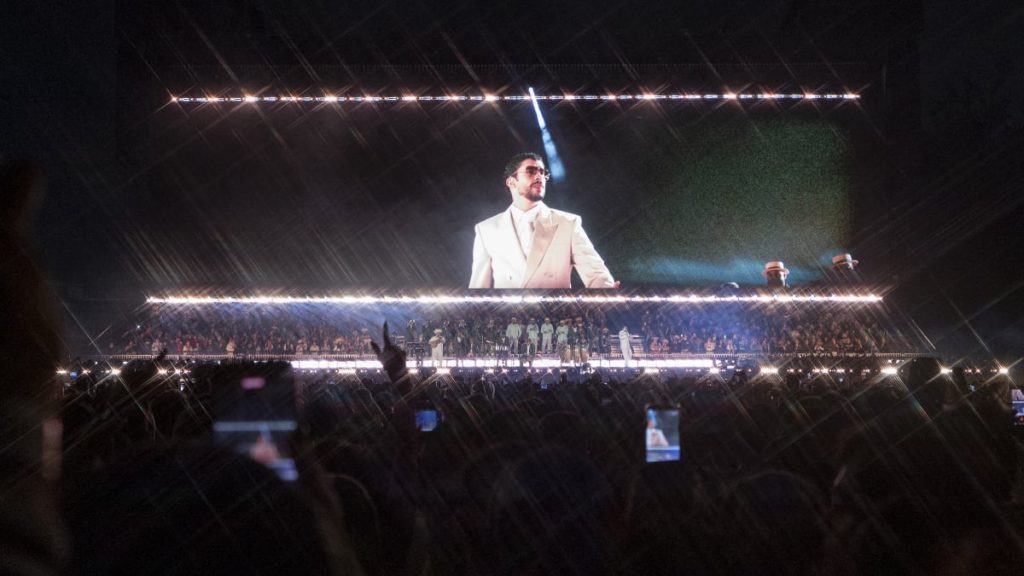
Bad Bunny will headline the Super Bowl LX halftime show on February 9, 2025, marking a significant cultural moment for the globally dominant artist and the National Football League’s championship event. The Puerto Rican singer, named Spotify’s most-streamed artist in 2025, is set to perform during the game between the New England Patriots and Seattle Seahawks, which kicks off at 6:30 p.m. ET on NBC and streams on Peacock.
The performance will likely feature tracks from his Grammy-winning album DeBÍ TiRAR MáS FOToS, including major international hits. Beyond the setlist, attention is focused on whether Bad Bunny will address political themes, consistent with his public stance. He has previously voiced opposition to U.S. Immigration and Customs Enforcement (ICE), including remarks at the 2024 Grammy Awards, which could inform his messaging during the show’s massive global platform.
For viewers tuning in primarily for the halftime spectacle, timing is variable. Super Bowl broadcasts typically last approximately three hours and 44 minutes, placing the intermission roughly 90 minutes after kickoff, around 8 p.m. ET. However, game length depends on possessions, penalties, and play reviews. Viewers are advised to check the broadcast around 7:30 p.m. ET to avoid missing the start of the performance.
Bad Bunny’s selection underscores the Super Bowl halftime show’s evolution into a major pop-culture event, often attracting audiences beyond traditional football fans. His appearance follows a trend of featuring globally recognized acts, reflecting the NFL’s strategy to engage diverse, international viewership. The show will be broadcast in over 200 countries, amplifying its reach.
The combination of a high-stakes game and a headliner of Bad Bunny’s stature ensures dual audience appeal. His performance is expected to break viewership records, continuing the tradition of halftime shows that generate significant social media engagement and cultural conversation. For Media Talk Africa’s audience, the event highlights the growing influence of Spanish-language and global artists in mainstream U.S. entertainment spectacles.




Comments are closed for this story.