
Gold Rush Erupts in Former South African Mining Town Amid Unemployment Crisis
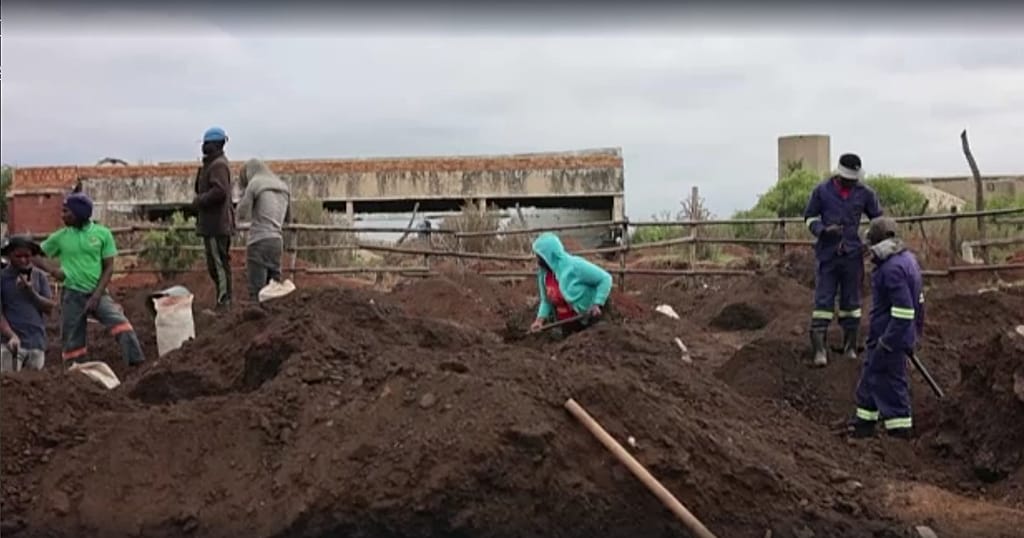
Springs, South Africa – A reported gold discovery has triggered an informal gold rush in Springs, a town east of Johannesburg, drawing dozens of prospectors to dig on a cattle farm. The activity began around February 8 after a local man claimed to have found gold while digging a fence post, a story that rapidly spread via social media.
The site, located on land formerly used for cattle kraaling, is now crowded with individuals excavating small holes, driven by the hope of finding valuable ore. Security guard Princess Thoko Mlangeni described the influx as sudden and overwhelming. “They spread like a virus,” she said, observing the development from her nearby home.
This event unfolds against a backdrop of severe economic pressure. South Africa’s official unemployment rate hovers near 32 percent, making even unverified rumours of “easy money” a powerful draw. The town’s history as a major gold mining centre until the late 1960s adds a layer of plausibility to the prospectors’ hopes. Furthermore, the global price of gold, which has surged past $5,000 per ounce, increases the potential allure of even small finds.
However, authorities have issued warnings. A provincial spokesperson stated the unauthorised digging is causing environmental damage. The Department of Mineral and Petroleum Resources has urged participants to apply for lawful prospecting permits, noting that the legality of their actions is questionable. As of now, the department has not verified whether the rumoured gold deposits actually exist. At least one mining expert has cautioned that the excitement may be misplaced.
The situation mirrors a similar frenzy in South Africa’s KwaZulu-Natal province in 2021, where crowds rushed to collect crystal-like stones believed to be diamonds. Those stones were later confirmed by experts to be common quartz. That incident underscores the risk of unverified mineral claims sparking large-scale, disorderly prospecting.
The current dig in Springs highlights the intersection of high unemployment, historical mining knowledge, and the powerful lure of mineral wealth. While participants risk legal consequences and health and safety hazards in their informal excavations, authorities face the challenge of managing the environmental impact and verifying the site’s actual mineral potential. The episode serves as a stark example of how economic desperation can rapidly translate into tangible on-ground activity in response to mineral rumours, regardless of their credibility.




Comments are closed for this story.