
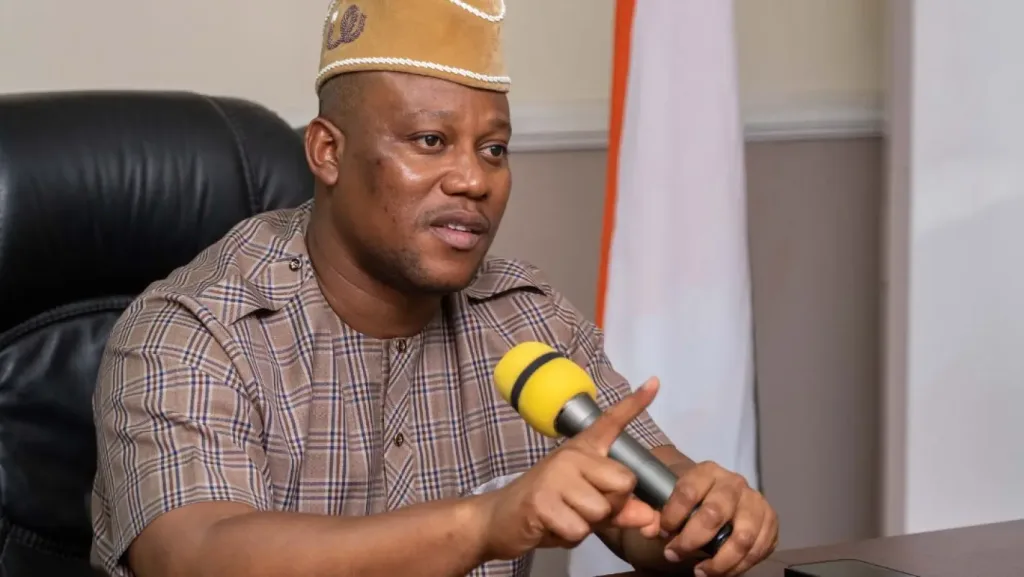
A senior official of Nigeria’s main opposition party has alleged a coordinated plot to manipulate the 2027 general elections, involving the duplication of official result sheets and collusion with electoral commission staff.
Ini Ememobong, National Publicity Secretary of the Peoples Democratic Party (PDP), detailed the alleged scheme during an interview on Arise Television. He claimed that certain individuals, working with compromised operatives from the Independent National Electoral Commission (INEC), plan to print duplicate copies of the standardised result document, Form EC8A, using identical serial numbers. This, he stated, would create two conflicting result sheets for the same polling unit.
Ememobong explained the purported method: after voting, the accredited voter count captured electronically by the Bimodal Voter Accreditation System (BVAS) would be obtained. This figure would then be used to manually fabricate results away from the polling site. He referenced past incidents, alleging that some actors have previously stored pre-filled result sheets in private locations before attempted submission.
The PDP spokesman linked these tactics to broader voter disillusionment, citing the 2023 elections where only 26% of registered voters cast ballots. He contended that public fear over the electronic transmission of results stems from this vulnerability to manual counterfeiting. “Why people are afraid of electronic transmission… is that with collusion… they are going to print the serial number… and they are going to use the same serialized number,” Ememobong stated.
The allegations point to a specific procedural weakness: while BVAS digitally records accreditation, the final tally and result declaration for many units reportedly remain manual. This hybrid system, critics argue, could allow accredited voter totals to be misapplied to falsified result sheets.
Form EC8A is the official constituency result sheet, a critical document that consolidates polling unit results. Its integrity is fundamental to the accuracy of election outcomes. The claim that duplicate, identically numbered forms could be produced and substituted strikes at the core of result authentication processes.
These assertions, coming from a prominent party figure, intensify pre-election concerns about electoral preparedness and institutional neutrality ahead of 2027. They underscore persistent allegations of systemic vulnerabilities within Nigeria’s voting framework. INEC has not yet responded to the specific allegations. The commission has consistently maintained that its systems, including the BVAS and result collation mechanisms, are secure and designed to prevent tampering.
The narrative highlights the urgent national debate on fully digitalising result transmission to eliminate manual manipulation points. For international observers and domestic civil society, the allegations reinforce the necessity of robust domestic and international election observation missions in the next electoral cycle to monitor compliance and deter fraud. The credibility of Nigeria’s democratic process may depend on addressing these perceived flaws before the 2027 polls.



Comments are closed for this story.