
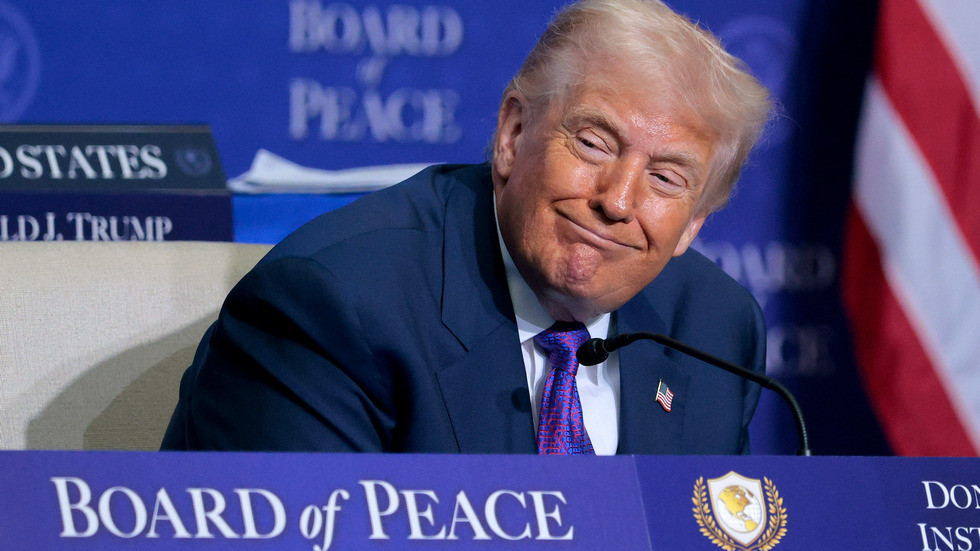
US President Donald Trump has expressed a desire for Russia and China to join a US-led “Board of Peace” aimed at overseeing Gaza’s reconstruction and ceasefire implementation following the Israel-Hamas war. While Moscow indicated it is considering the invitation, Beijing has formally declined, citing its commitment to a UN-centered international system.
The board, formally established in January on the sidelines of the World Economic Forum in Davos and chaired by Trump, held its inaugural meeting in Washington this week. Trump stated that over 20 nations have accepted the invitation to join, with approximately 35 more expressing interest. He told reporters aboard Air Force One that he “would love to have China and Russia,” noting they had been invited and that “you need all persuasions.”
Russia, however, has not formally joined. The Kremlin confirmed it received the invitation and is studying the proposal. Earlier, President Vladimir Putin suggested Russia might contribute $1 billion—the reported fee for a permanent seat—from its frozen sovereign assets, though Moscow later said it had not received a US response to that idea.
China’s Foreign Ministry stated it declined the invitation because it adheres to “true multilateralism” and believes the UN should play the central role in international affairs. This aligns with the position of several major Western allies, including Germany, France, the United Kingdom, and Italy, which also refused to participate. Their cited concerns include the potential for the board to undermine UN authority and the inclusion of Russia.
The body has drawn criticism for its composition, notably the absence of Palestinian representation despite Israel’s acceptance. Trump announced at the inaugural meeting that the US has pledged $10 billion to the board’s efforts, with nine other founding members—Kazakhstan, Azerbaijan, the UAE, Morocco, Bahrain, Qatar, Saudi Arabia, Uzbekistan, and Kuwait—committing a combined $7 billion.
The board’s creation represents a unilateral US effort to shape the post-war governance and reconstruction of Gaza. Its long-term viability and effectiveness will depend on securing broader international legitimacy, which remains challenging given the abstentions of key permanent UN Security Council members and major donors. The parallel efforts of the UN and other international actors will continue to influence the territory’s future as the board proceeds with its planning.



Comments are closed for this story.