
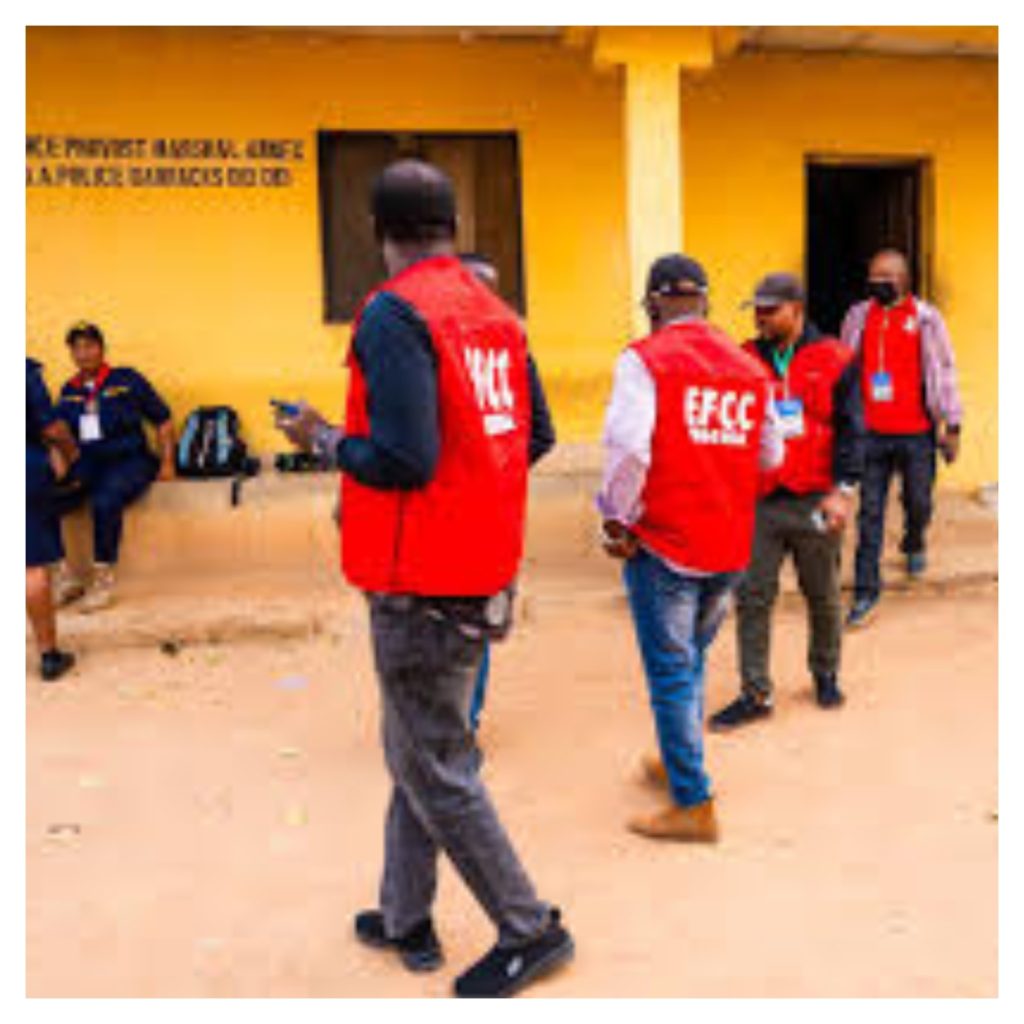
EFCC Arrests 20 for Electoral Offences During FCT Council Polls
The Economic and Financial Crimes Commission (EFCC) has arrested 20 individuals for various electoral offences committed during Saturday’s local government elections in the Federal Capital Territory (FCT), Abuja.
Dele Oyewale, the EFCC’s Head of Media and Publicity, confirmed the arrests in a statement issued on Sunday. He said the suspects were apprehended across the territory for offences including vote buying, vote selling, and obstruction of electoral officers. The total sum of money seized in connection with the offences amounts to N17.2 million.
A significant seizure involved one suspect who was arrested with N13.5 million in a vehicle parked near a polling unit in Kwali Local Government Area.
The arrests were distributed as follows: two suspects in Abaji, nine in Gwagwalada, four in Kuje, and the remaining four in Kwali. Oyewale stated that the suspects will be prosecuted in court upon the completion of the EFCC’s investigations.
The arrests come amid persistent concerns over the integrity of Nigeria’s electoral process, where vote trading remains a recurrent challenge flagged by observers and civil society groups. The EFCC, as the nation’s primary anti-graft agency, has a statutory duty to investigate financial crimes, including those that undermine free and fair elections. Its actions during the polls align with its broader mandate to combat economic sabotage and corruption.
Saturday’s local government elections in the FCT were conducted by the Independent National Electoral Commission (INEC) to fill chairmanship and councillorship positions across the six area councils. The commission had repeatedly warned against inducement of voters, underscoring that such acts are criminal under Nigeria’s electoral laws.
By making these high-profile arrests and publicly disclosing details, the EFCC signals a commitment to enforcing electoral regulations. The forthcoming court cases will test the strength of the evidence gathered and serve as a deterrent to others. Successful prosecutions could reinforce the message that electoral offences will be treated as serious financial crimes, not merely administrative violations.
The developments also highlight the operational coordination required between INEC, security agencies, and anti-corruption bodies during elections. For international observers and development partners focused on democratic governance in Nigeria, the EFCC’s visible role in policing the financial aspects of voting is a key indicator of institutional responsiveness to long-standing reform recommendations.
As investigations conclude, legal proceedings are expected to commence in the coming weeks, with the courts set to determine the culpability of the 20 individuals. The outcome will be closely watched for its potential impact on future electoral conduct in the nation’s capital and beyond.



Comments are closed for this story.