
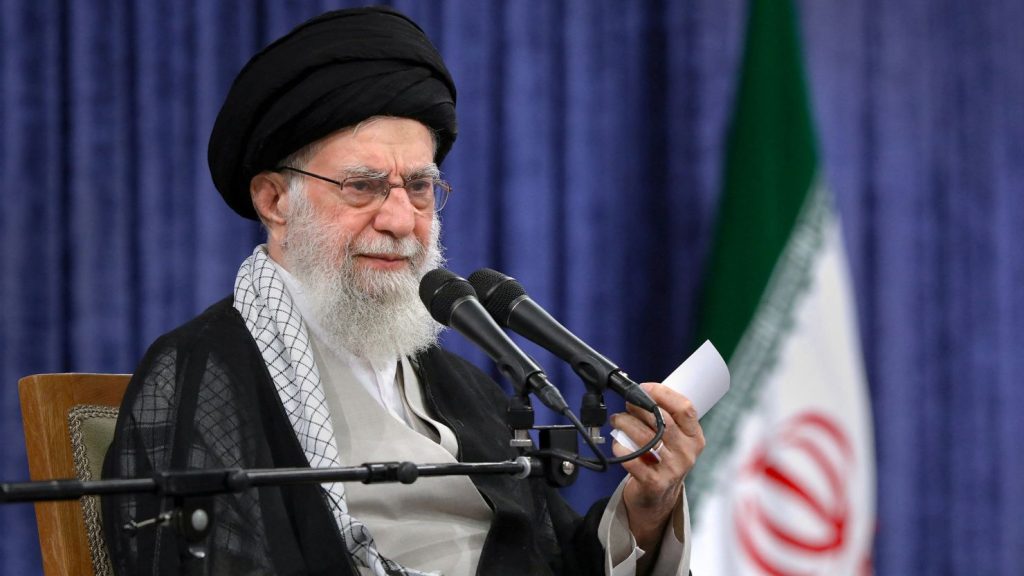
Iran has declared 40 days of national mourning following the death of Supreme Leader Ayatollah Ali Khamenei, state television reported. News agencies IRNA and Fars described his death as a “martyrdom,” attributing it to strikes conducted by the United States and Israel on Saturday.
The early morning attacks targeted locations where senior Iranian officials were meeting, according to the Israeli military. The assault, which Iran’s Red Crescent said killed more than 200 people, also claimed the lives of top figures including Defense Minister Amir Hatami and Major General Hossein Salami, head of the Islamic Revolutionary Guard Corps (IRGC).
In response, Iran and its allies launched retaliatory missile and drone attacks against Israeli and U.S. military positions across the Middle East. The U.S. and Israeli militaries reported intercepting the majority of the projectiles.
Khamenei, 85, had been Iran’s ultimate authority for over three decades, shaping the Islamic Republic’s domestic governance and its foreign policy as a regional power. His role encompassed final oversight of the military, judiciary, and state media.
The Supreme National Security Council, a body centralizing military strategy since a 2024 conflict with Israel and the U.S., stated that Khamenei’s “martyrdom will mark the beginning of a great uprising against the tyrants of the world.” The statement signaled a continuation of confrontational rhetoric.
U.S. President Donald Trump, who earlier announced Khamenei’s death on social media, called the development “the single greatest chance for the Iranian people to take back their country.” His characterization was echoed by celebratory reports from exile media, which described spontaneous joy in Tehran as news spread via satellite broadcasts.
The death of the long-serving leader creates an immediate power vacuum. Iran’s political system designates an interim successor, but the event represents the most significant leadership transition since the 1989 death of founder Ayatollah Ruhollah Khomeini. The international community now observes for signs of instability within Iran’s theocratic structure and potential escalation in the longstanding shadow war between Iran, Israel, and the United States. The declared mourning period suggests a controlled succession process is underway, though the long-term impact on Iran’s regional posture remains uncertain.



Comments are closed for this story.