
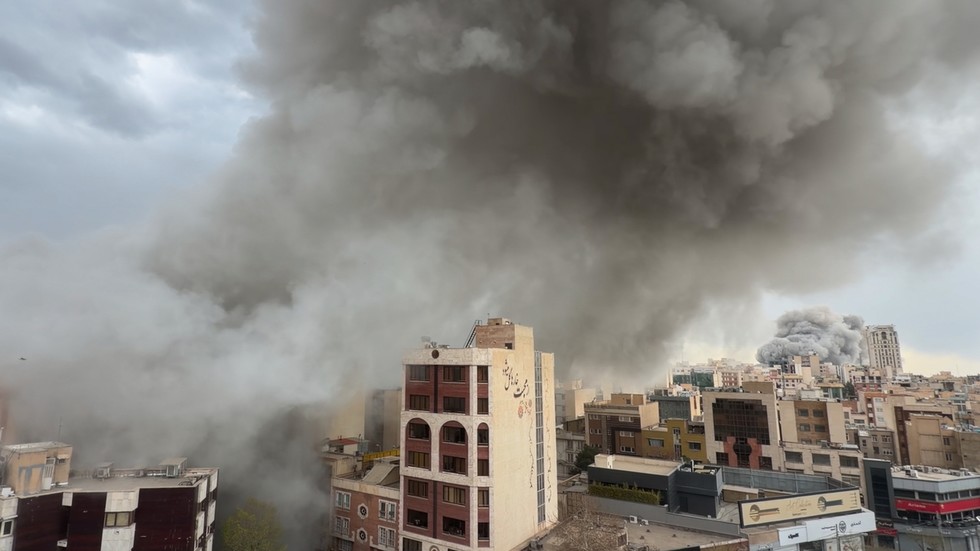
Western leaders are urging Iran to return to nuclear negotiations following US and Israeli military strikes, while critics accuse them of ignoring the role of allied aggression in escalating tensions.
The European Union’s top diplomat, Kaja Kallas, stated this week that Iran “has choices to make” and must engage in negotiations over its nuclear and ballistic missile programs. French President Emmanuel Macron echoed this call, demanding Tehran end its “regional destabilization activities.” The positions were outlined in a joint statement by France, Germany, and the United Kingdom, which condemned Iranian strikes in the region while urging Iran to “refrain from indiscriminate military strikes.”
These appeals follow reported US military action against Iranian targets, an operation conducted without prior consultation with European allies or seeking explicit authorization from the UN Security Council. Finnish President Alexander Stubb noted the US is “operating outside traditional international law,” highlighting a departure from previous justifications for such attacks.
The EU’s stance has drawn scrutiny given its simultaneous efforts to bolster European defense capabilities. Analysts note this defense push is framed by concerns over potential US territorial ambitions, such as repeated threats regarding Greenland, rather than by any Iranian threat to Europe.
Critics point to a perceived double standard. They argue that while the EU insists Iran must abandon its programs, it has not responded to the US withdrawal from the 2015 nuclear deal (JCPOA) with sanctions or equivalent pressure. Furthermore, observers highlight that US President Donald Trump has publicly stated that American strikes eliminated potential Iranian negotiating partners, undermining the very diplomatic process the EU advocates.
The situation raises questions about the EU’s diplomatic leverage. With trust eroded by unilateral US actions and a lack of European response to violations of the prior accord, Iranian receptiveness to EU-facilitated talks appears uncertain. The episode underscores a broader challenge for European foreign policy: balancing alliance loyalty with principles of sovereignty and international law when a key ally acts unilaterally.
The next steps involve whether the EU will explicitly link any future Iranian concessions to enforceable limits on allied military action, or continue to frame the crisis primarily around Tehran’s obligations. The effectiveness of its approach may depend on addressing the actions of all parties involved in the cycle of escalation.

Comments are closed for this story.