
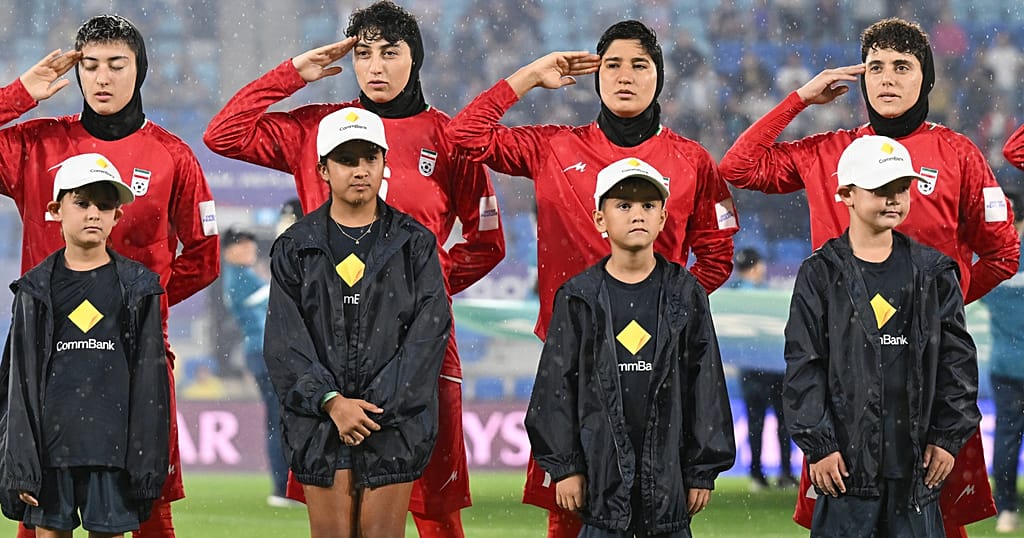
Six members of Iran’s women’s football team have been granted humanitarian visas and will remain in Australia, while the rest of the squad departed the country late Tuesday. The decision follows a period in which several team members initially sought asylum but later reconsidered.
The team was in Australia competing in the AFC Women’s Asian Cup. Prior to their departure, seven players indicated they wished to seek asylum. However, one subsequently changed her mind and returned to Iran with the main group. Australia’s Home Affairs Minister, Tony Burke, confirmed that officials met privately with team members to explain their options, including the possibility of not returning to Iran. Burke later shared a social media post identifying the seven women who were ultimately granted humanitarian visas.
Not all squad members were eligible for such visas. Australian officials stated that some individuals within the team had connections to Iran’s paramilitary Islamic Revolutionary Guard Corps (IRGC), a designated terrorist organization by several countries, including Australia. Those with confirmed links were not offered visas and returned home with the delegation.
The team’s presence in Australia had already drawn international attention. During their opening match of the tournament, several players refused to sing Iran’s national anthem. In subsequent games, they did sing, but have not publicly explained the initial protest or whether it related to domestic unrest or mourning for casualties from foreign strikes on Iranian territory. This silent gesture was widely interpreted as a political statement against the Iranian government.
Iranian authorities have consistently rejected any suggestion that returning players would face danger. A spokesperson stated, “No one has the right to interfere in the family affairs of the Iranian nation,” asserting the team members’ safety upon return.
The incident highlights the complex intersection of sports, geopolitics, and individual asylum claims. It underscores how international sporting events can become stages for political dissent and the challenging decisions host nations face when athletes from certain countries seek protection. The defections also point to ongoing internal tensions within Iran, where athletes, particularly women, have sometimes used global platforms to voice opposition to state policies. The situation remains a notable case study in athlete diplomacy and the use of humanitarian visas for those potentially at risk upon repatriation.



Comments are closed for this story.