
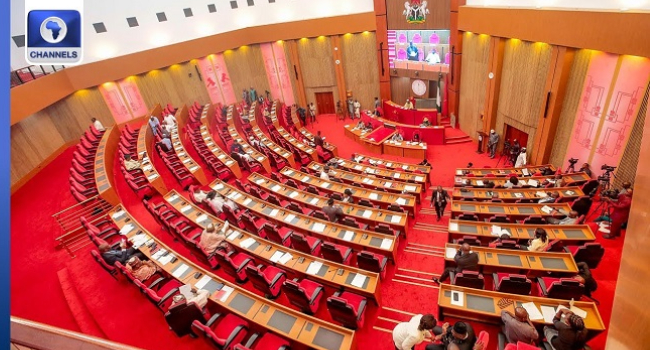
The Nigerian Senate’s leadership will hold high-level discussions with International Monetary Fund (IMF) officials in March 2026 as part of the fund’s routine Article IV Consultation for the country, a process that assesses economic policies and financial stability.
The engagement, confirmed by Senate Deputy President Barau Jibrin, was specifically requested by the IMF and will focus on the government’s economic management framework and ongoing reform programmes under President Bola Tinubu’s administration. Scheduled from March 4 to March 17, 2026, the consultation will involve meetings between the IMF team and key government institutions. The Senate’s session aims to provide lawmakers with deeper insight into the reform agenda and explore potential areas of future support for Nigeria’s economic policies.
This dialogue occurs against a backdrop of modest but strengthening economic projections from global financial institutions. For 2025, the IMF forecasts growth of 3.4 per cent, while the World Bank projects an average of 3.6 per cent for 2025-2026. Both institutions attribute this tentative recovery to recent reforms, including the removal of fuel subsidies, exchange-rate unification, and tighter monetary policy, which have helped stabilise government finances and improve business confidence. Growth has been primarily driven by services like telecommunications and finance, with agriculture and non-oil industries also contributing.
Looking further ahead, the outlook is more optimistic. The IMF has revised Nigeria’s 2026 growth forecast to 4.4 per cent, with the World Bank projecting similar expansion through 2027. This anticipated acceleration is tied to the continued implementation of fiscal and monetary reforms aimed at strengthening macroeconomic stability and diversifying the economy away from oil dependence. Persistent challenges, however, include inflation, fiscal pressures, and structural bottlenecks in energy and infrastructure.
The upcoming Senate-IMF meeting signifies a critical juncture where legislative oversight aligns with international review. It offers a platform to align Nigeria’s reform trajectory with global best practices and to secure feedback that could shape future policy adjustments. As the country strives for sustained and inclusive growth, the consultation underscores the importance of coordinated governance and external partnership in navigating ongoing economic vulnerabilities.



Comments are closed for this story.