
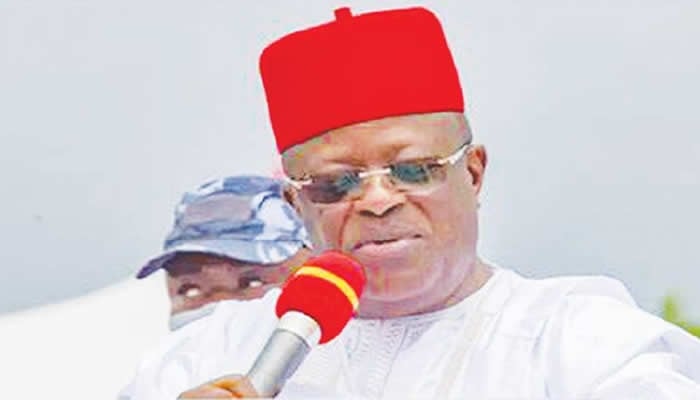
Nigeria’s Minister of Works, David Umahi, has formally invited the Independent Corrupt Practices and Other Related Offences Commission (ICPC) and the Economic and Financial Crimes Commission (EFCC) to conduct a comprehensive, physical audit of all road projects under his ministry. The move is a direct response to public allegations of corruption and mismanagement in federal infrastructure contracts.
Speaking in Abuja on Wednesday after receiving a “Personality of the Year” award from Al-Jazeera Newspaper Nigeria, Umahi stated the probe is intended to demonstrate transparency. “We wrote to ICPC to go round and investigate all our projects, not on paper, but physically. We also wrote to EFCC. We are not hiding anything,” he said. He confirmed the ICPC has already begun reviewing procurement processes, while the EFCC’s investigation is scheduled to start after the Sallah break.
Umahi asserted that all project costs are fully accountable, claiming officials can detail the pricing for every component, from cement to labour. He linked some criticism to the ministry’s strategic shift from asphalt to concrete road construction—a policy he defended as being in the nation’s long-term interest, with concrete roads lasting up to 100 years.
The minister also urged the media to exercise caution, advising journalists not to amplify unverified allegations and to prioritise accuracy. “We support freedom of information, but we must all be accountable,” he stated.
This proactive invitation for external scrutiny occurs amid heightened examination of government spending under President Bola Tinubu’s Renewed Hope Agenda. For the 2025 fiscal year, the Ministry of Works proposed a capital expenditure of approximately N3.24 trillion, primarily to complete ongoing road projects. Nigeria’s road sector has long faced challenges including allegations of inflated contracts and abandoned projects.
Al-Jazeera Newspaper Nigeria defended its award decision, with CEO Williams Bassey stating that extensive investigations in 2024 found no evidence of corruption against Umahi. “After rigorous evaluation… we unanimously selected the minister for this award,” Bassey said, citing the minister’s role in transforming infrastructure delivery.
Analysts note that a sustained, independent audit process could establish a new precedent for accountability in Nigeria’s infrastructure sector, an area critical for economic growth and national integration.


Comments are closed for this story.