
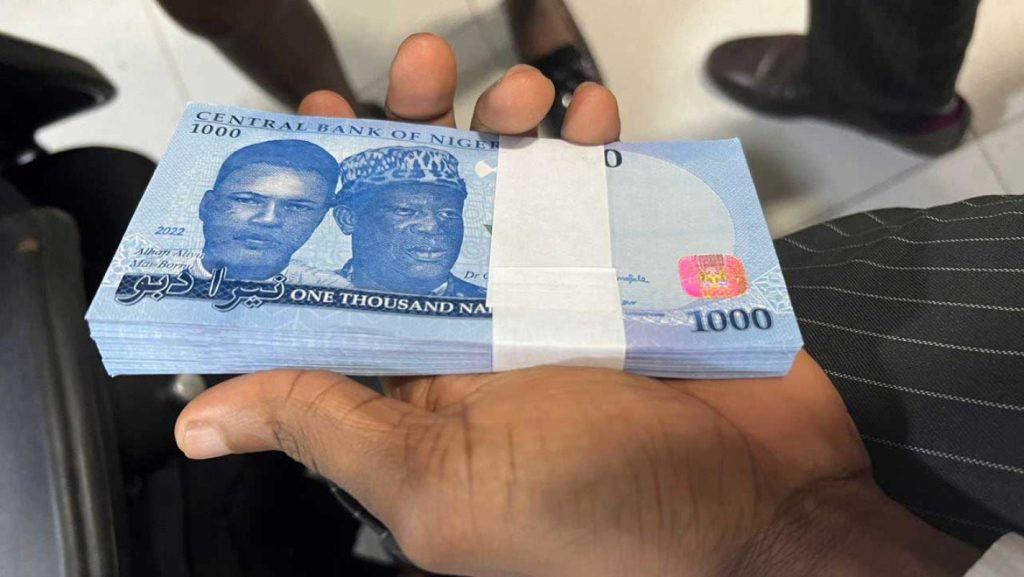
The Nigerian naira exhibited divergent trends across foreign exchange markets on Monday, appreciating on the official market while simultaneously weakening in the parallel segment.
Data from the Central Bank of Nigeria indicated that the local currency strengthened to N1,357.77 per US dollar at the official window. This represented an improvement of N8.46 from the previous Friday’s closing rate of N1,366.23. The sustained appreciation follows recent measures by the central bank aimed at unifying exchange rates and boosting dollar supply.
Conversely, the naira depreciated in the black market, where it traded at an average of N1,430 per dollar on Monday. This marked a N5 loss from the N1,425 per dollar recorded at the close of the prior week. The contrasting movements highlight the persistent gap between the regulated and unregulated foreign exchange segments.
These market developments coincide with other key economic updates. Last week, the Central Bank reported a rise in Nigeria’s foreign reserves to $50.027 billion, providing a buffer for the official market. Furthermore, the National Bureau of Statistics announced a slight decline in the headline inflation rate to 15.06 percent in February, though it remains elevated.
Analysts note that the official market’s stability may be influenced by the improved reserve position and ongoing regulatory efforts. However, the parallel market continues to reflect different demand-supply dynamics. The split performance underscores the complexities within Nigeria’s multiple exchange rate system as authorities push for greater convergence.
The trajectory of the naira will likely remain a focal point for monetary policy and inflationmanagement in the coming weeks. Market participants will watch for further actions from the Central Bank of Nigeria to sustain the gains in the official segment and narrow the disparity with the black-market rate.



Comments are closed for this story.