
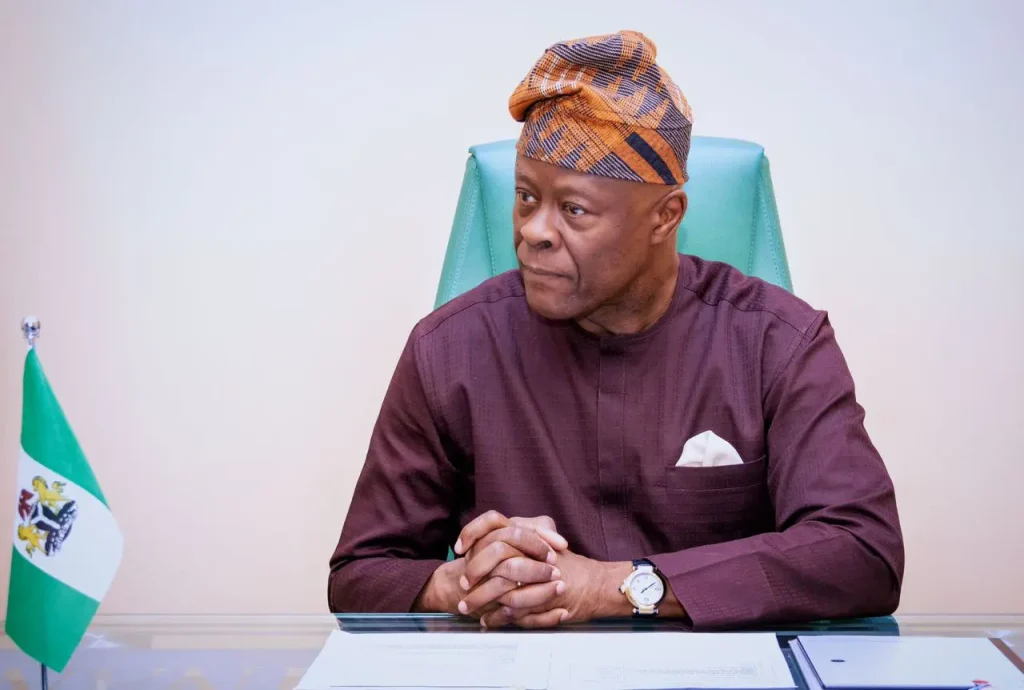
Nigeria’s Finance Minister Wale Edun stated that illicit financial flows remove approximately $88 billion annually from African economies, significantly constraining development efforts across the continent. Speaking at the fifth Subcommittee on Tax and Illicit Financial Flows in Abuja, an event organized by the African Union and the Nigeria Revenue Service, Edun urged African governments to strengthen domestic resource mobilization and tighten enforcement against unauthorized capital outflows.
Edun emphasized that the continuous leakage of unrecorded revenues limits the capacity of developing nations to fund essential public services, including infrastructure maintenance, healthcare expansion, and social protection programs. He noted that African economies must prioritize fiscal self-reliance by improving tax administration efficiency and enforcing stricter financial discipline. Nigeria’s ongoing macroeconomic restructuring, he added, offers a practical reference point for other member states pursuing structural reforms aimed at long-term growth and economic stability.
Nigeria Revenue Service Executive Chairman Zacch Adedeji reinforced that transparent revenue collection is foundational to effective governance and institutional accountability. He explained that predictable and equitable tax systems strengthen public trust while generating the capital required for sustainable development. Modernizing revenue administration has become a central pillar of fiscal policy across Africa, with multiple countries revising compliance frameworks to reduce evasion and create a more stable investment climate.
Mary Baine, Executive Secretary of the African Tax Administration Forum, aligned these priorities with the African Union’s Agenda 2063, noting that continental development targets depend heavily on the ability to finance growth internally. She highlighted that illicit financial flows, typically driven by trade misinvoicing, corporate opacity, and cross-border tax avoidance, continue to divert resources away from productive economic sectors. Baine stressed that closing these financial gaps requires sustained data sharing and coordinated oversight among regional tax authorities.
As global economic volatility continues to pressure emerging markets, the expansion of domestic revenue collection and the systematic reduction of financial leakages remain critical to stabilizing African public finances. Strengthened institutional capacity and consistent policy implementation will determine the continent’s ability to meet long-term development objectives and build resilient economic structures.



Comments are closed for this story.