
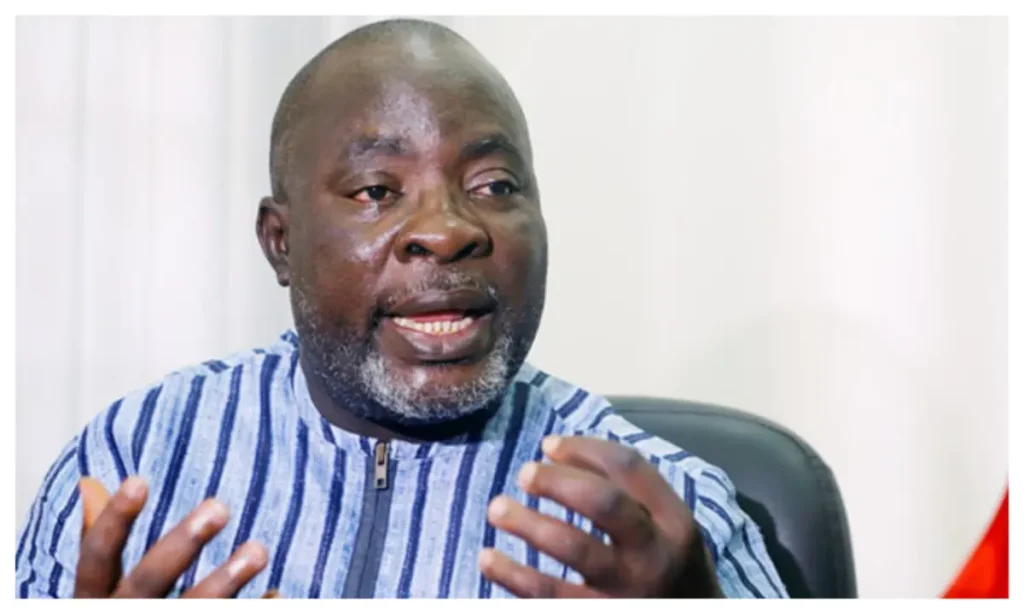
The African Democratic Congress (ADC) is embroiled in a deepening internal crisis that has seen the removal of former Senate President David Mark as its national chairman, a move the party’s leadership claims is part of a broader political strategy orchestrated by the ruling All Progressives Congress (APC). Speaking on Arise Television’s ‘Prime Time’ on Wednesday, Kola Ologbondiya, Media Adviser to the embattled national chairman, alleged that the party’s ongoing disputes with the Independent National Electoral Commission (INEC) are being deliberately fuelled to weaken viable opposition ahead of future elections.
Ologbondiya accused the APC of sponsoring factional disputes within opposition parties, describing the current turmoil in the ADC as a calculated effort to destabilise democratic competition. “The supposed crises in political parties are being sponsored,” he said, adding that the recent protest by ADC leaders was aimed at warning President Bola Tinubu and those encouraging internal divisions that they would face political consequences.
The crisis within the ADC erupted after Mark was stripped of his position as national chairman in controversial circumstances, triggering protests and legal challenges within the party. Ologbondiya argued that such destabilisation tactics threaten Nigeria’s democratic progress, warning that the country risks sliding toward a one-party state rather than consolidating its multi-party democracy.
Since the return to civilian rule in 1999, Nigeria has prided itself on its competitive political landscape, with regular transfers of power between rival parties. However, opposition figures now warn that increasing state interference and internal fragmentation are eroding that pluralism. Ologbondiya said the current trajectory undermines the growth expected two decades into the Fourth Republic, replacing it with what he described as a “decapitation” of opposition strength.
The ADC’s leadership has called for greater electoral reforms and an end to what it perceives as politically motivated manipulation of party structures. As the dispute with INEC continues, the party’s ability to present a united front in forthcoming elections remains uncertain, raising broader questions about the health of Nigeria’s opposition politics and the resilience of its democratic institutions.

Comments are closed for this story.