
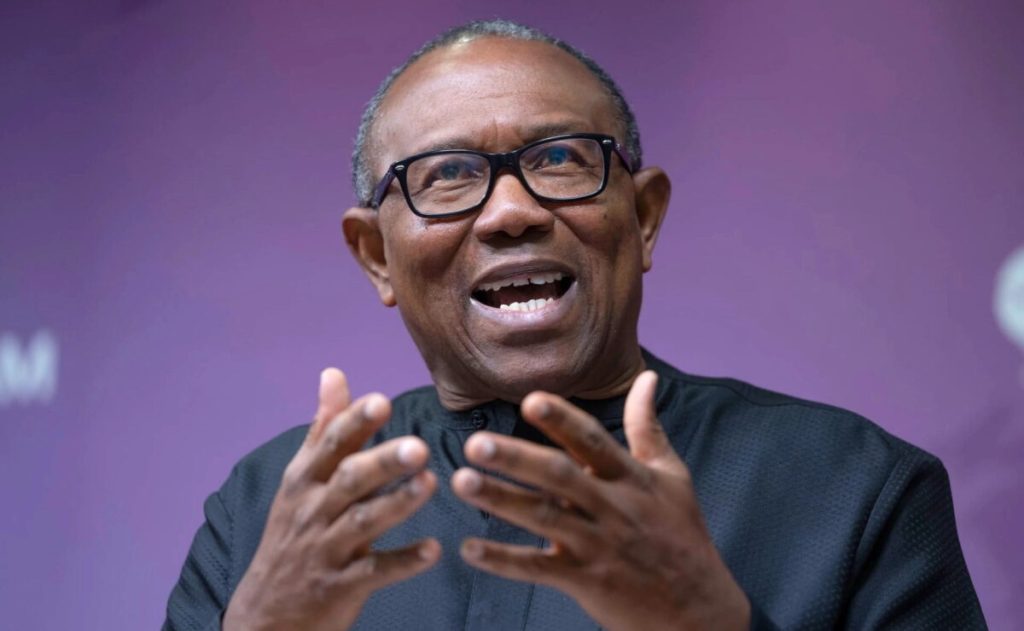
LAGOS, Nigeria — Former Nigerian presidential candidate Peter Obi has raised concerns about what he describes as significant revenue leakages within the country’s public finance system. He warns that Nigeria is “bleeding from within,” despite an increase in national earnings. In a statement shared on the social media platform X on Saturday, Obi referenced World Bank data indicating that Nigeria generated approximately ₦84 trillion in federation revenue over the past three years. However, he claimed that 41 percent of this revenue—around ₦34.44 trillion—was never remitted to the Federation Account.
Obi, the former governor of Anambra State, emphasized that this unallocated sum exceeds the combined ₦34 trillion designated for capital projects in Nigeria’s 2024 and 2025 Appropriation Bills. He described this comparison as a stark indicator of systemic inefficiencies in public finance management. According to Obi, such revenue losses have deprived critical sectors, including healthcare, education, and infrastructure, of essential funding. He called for increased transparency and accountability in revenue collection and allocation, urging leaders to prioritize national development over institutional mismanagement.
“This is not a mere oversight; it points to institutionalized corruption on a massive scale,” Obi stated. He recalled the outrage among Nigerians in 1994 when the Okigbo Panel reported that $12.4 billion from the Gulf War oil windfall was unaccounted for. Today, he noted, an even more troubling situation seems to be unfolding, yet it is met with a disquieting silence. Obi characterized Nigeria’s situation as a “lethal paradox,” where the nation earns more while having less to invest in essential services. He pointed out that, starting in 2025, systemic “deductions” have enabled agencies to capture more resources than entire states and even critical ministries.
Obi’s comments come amid ongoing public discourse regarding governance, fiscal transparency, and the effective management of Nigeria’s oil and non-oil revenues. His remarks are likely to intensify scrutiny of federal revenue management practices as the country grapples with increasing economic and developmental challenges.



Comments are closed for this story.