
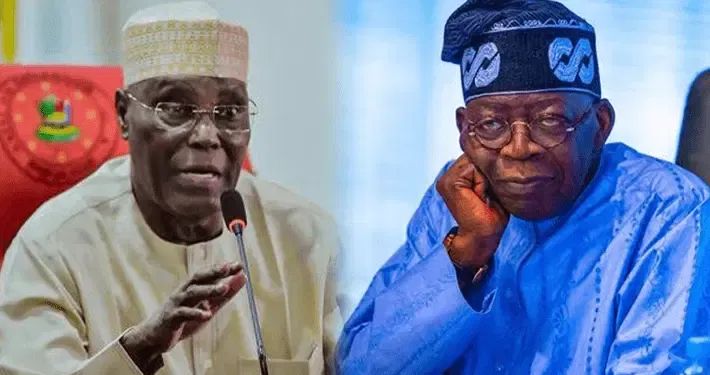
Former Nigerian Vice President Atiku Abubakar has sharply criticised President Bola Tinubu’s administration, describing the country’s economic situation as “organised hardship disguised as reform.” His remarks come after a recent warning from the International Monetary Fund (IMF) about Nigeria’s deteriorating outlook, which Atiku says merely confirms the daily struggles already faced by millions of citizens.
In a statement issued on Sunday by his Senior Special Assistant on Public Communication, Phrank Shaibu, Atiku said the IMF’s assessment validates widespread concerns over worsening living conditions. “At a time when Nigerians were promised renewed hope, what they have received is renewed hardship—raw, relentless, and unforgiving,” he said. “The IMF is not breaking news; it is confirming a national emergency that this administration refuses to acknowledge.”
Atiku accused the government of being disconnected from the plight of ordinary Nigerians. While officials rely on technical economic language, citizens grapple with soaring food prices, high transportation costs, exchange‑rate instability, and the continued depreciation of the naira. He noted that despite favourable global oil prices, more Nigerians are being pushed into poverty.
“The situation at the grassroots is even more severe,” Atiku added, citing parents withdrawing children from school because of rising costs, farmers abandoning their lands due to insecurity, and small businesses shutting down under the weight of taxes, electricity tariffs, and an unfavourable business environment. He warned that Nigeria faces not only an economic downturn but a broader erosion of living standards and human dignity. “This administration has turned sacrifice into a one‑way street where the people bear the burden while the government offers explanations,” he said. “You cannot ask a hungry population to remain patient while policies worsen their conditions.”
Atiku also raised concerns about Nigeria’s rising debt profile, cautioning that continued borrowing without visible improvements in citizens’ welfare could worsen the outlook. “We are borrowing heavily, yet there is little evidence of impact on the lives of the people—no jobs, no relief, no measurable improvement,” he said. He faulted the government’s reliance on theoretical economic policies that ignore real‑life consequences, stressing that governance is about whether citizens can afford basic necessities—food, transportation, and livelihood.
He called on the Federal Government to urgently adopt people‑centred policies aimed at stabilising prices, supporting small businesses, reducing transportation costs, and protecting vulnerable populations. “This is not the time for rhetoric; it is the time for decisive action,” he said. “The true measure of leadership is whether the lives of the people are improving. Today, Nigerians are worse off, and that reality cannot be ignored.”




Comments are closed for this story.