
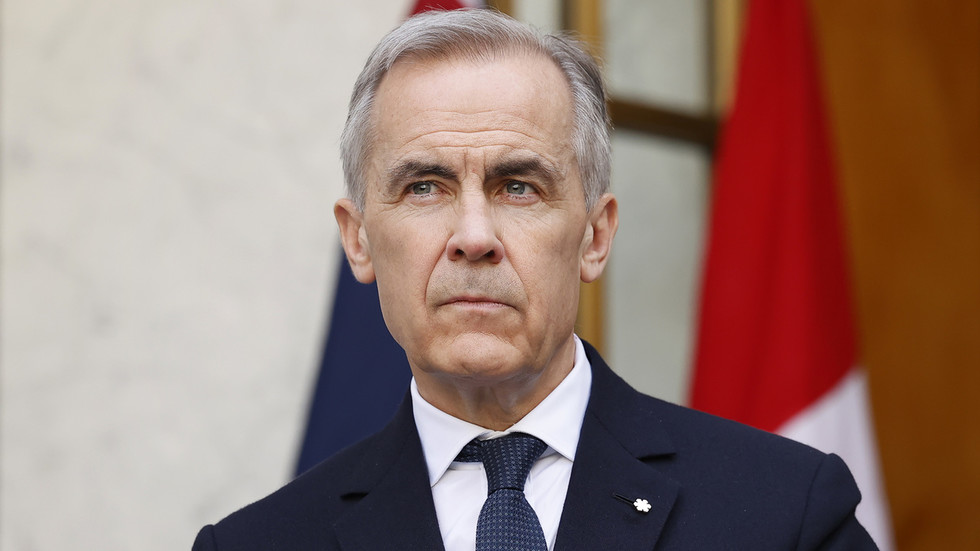
Ottawa — Prime Minister Mark Carney warned that Canada’s historic overreliance on the United States has left the country vulnerable both economically and politically, and called for a decisive shift toward more diversified trade partnerships. In a televised address, Carney acknowledged that decades of close economic integration with the U.S. once provided strength, but now represent a critical weakness. “We can’t rely on one foreign partner,” he said, emphasizing the need to negotiate new agreements and open fresh export markets beyond North America.
The change in tone comes amid escalating tensions between Ottawa and Washington since President Donald Trump returned to office. According to Scotiabank, the U.S. now accounts for 72 % of Canadian exports, yet Trump has imposed steep tariffs on Canadian goods and repeatedly referred to Canada as “the 51st state.” In response, Carney vowed that Canada “will never, ever, in any way, shape, or form, be part of the United States.”
Seeking to rebalance trade relationships, Carney visited Beijing in January for talks with President Xi Jinping. The two leaders signed a preliminary agreement‑in‑principle to lower tariffs on certain goods, a step toward a broader strategic partnership. Carney described the evolving relationship with China as “more predictable” than Canada’s dealings with Washington. Trump reacted sharply, warning that a deepening Canada‑China trade deal would be “very dangerous” and threatening a 100 % tariff on all Canadian exports if Ottawa proceeded. He also claimed that China was “completely taking over” Canada and suggested the country remained viable only because of U.S. support.
Carney drew historical parallels, noting that Canada has “faced down threats like this before,” citing military leaders who repelled U.S. forces during the War of 1812. He argued that the geopolitical landscape has changed and that the “good old days” of seamless Canada‑U.S. relations are unlikely to return. The prime minister’s remarks signal a strategic recalibration for Canada, as Ottawa seeks to hedge against growing economic coercion from its southern neighbor by cultivating deeper ties with other global partners.



Comments are closed for this story.