
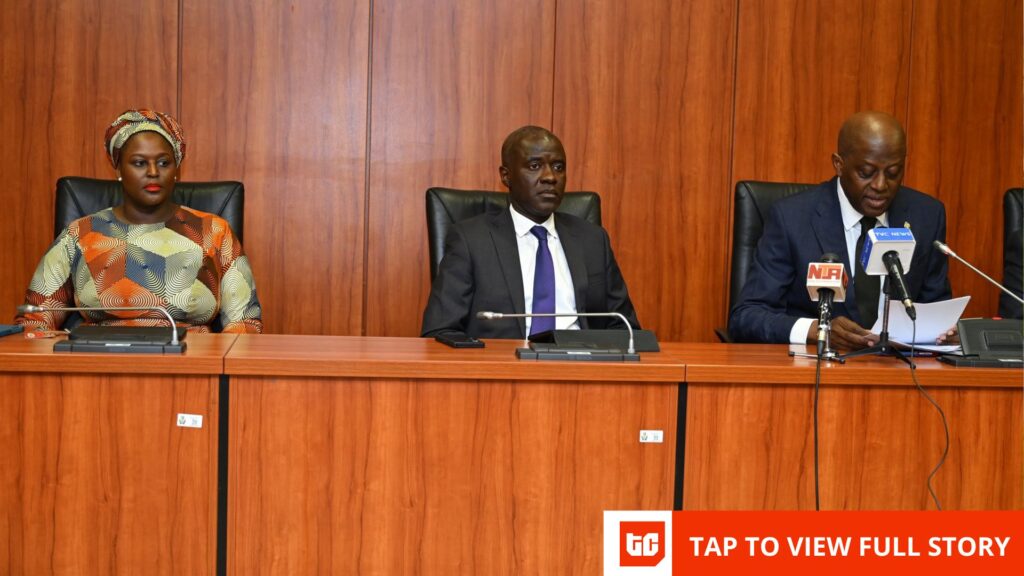
Nigeria’s Central Bank and the Nigerian Communications Commission have signed a formal agreement to give banks real‑time access to telecom data, aiming to close a major gap in the country’s digital payments security. The Memorandum of Understanding centres on the Telecom Identity Risk Management System (TIRMS), which will allow financial institutions to verify, before a transaction clears, whether a mobile number linked to it has been recently swapped, recycled, flagged for suspicious activity, or become inactive. This move targets the identity layer of Nigeria’s financial fraud problem.
According to the Nigerian Interbank Settlement Systems, fraud losses fell 51 % to ₦25.85 billion ($18.7 million) in 2025, but the threat remains significant. Many incidents involve SIM swaps and compromised phone numbers used to hijack accounts and bypass authentication. Until now, banks have had no reliable way to check the real‑time status of a mobile identity. “Mobile numbers increasingly underpin identity, authentication, and financial access,” said Aminu Maida, executive vice‑chairman of the NCC, at the signing in Abuja. “Collaboration with the CBN is essential to ensure innovation is matched with strong governance, system stability, and consumer safeguards.”
Financial fraud in Nigeria has become increasingly sophisticated. Industry data shows reported losses jumped from ₦17.67 billion ($12.80 million) in 2023 to ₦52.26 billion ($37.86 million) in 2024. Many schemes exploit weaknesses in telecom infrastructure, particularly SIM swaps, recycled numbers, and compromised mobile identities. The new framework will allow banks to verify, in near real time, whether a number linked to a transaction has been altered, reassigned, or flagged. “Across Nigeria, citizens and businesses depend on digital channels to save, pay, and trade,” said CBN Governor Olayemi Cardoso. “Those channels depend on resilient telecommunications networks, trusted identity systems, and secure data flows.”
The MoU also aims to strengthen the broader payments ecosystem. Both regulators will coordinate on instant payments, QR‑based transactions, and open‑banking standards to ensure that infrastructure across telecoms and finance can scale reliably. This is not the first collaboration between the CBN and NCC; their joint intervention in June 2025 helped resolve the long‑running USSD debt dispute between banks and telecom operators, restoring service stability. However, the regulators say the scale and complexity of today’s digital economy require a more formal and enduring framework.
Beyond fraud and payments, consumer protection is another key pillar. The agreement establishes mechanisms for faster resolution of issues that cut across both sectors, such as failed airtime purchases or transaction errors, and commits both regulators to coordinated public education and stronger complaint‑handling systems. The MoU creates two joint committees—one focused on payment systems and consumer protection, and another on telecom identity risk management. These groups will oversee coordination, resolve operational issues, and track progress.




Comments are closed for this story.