
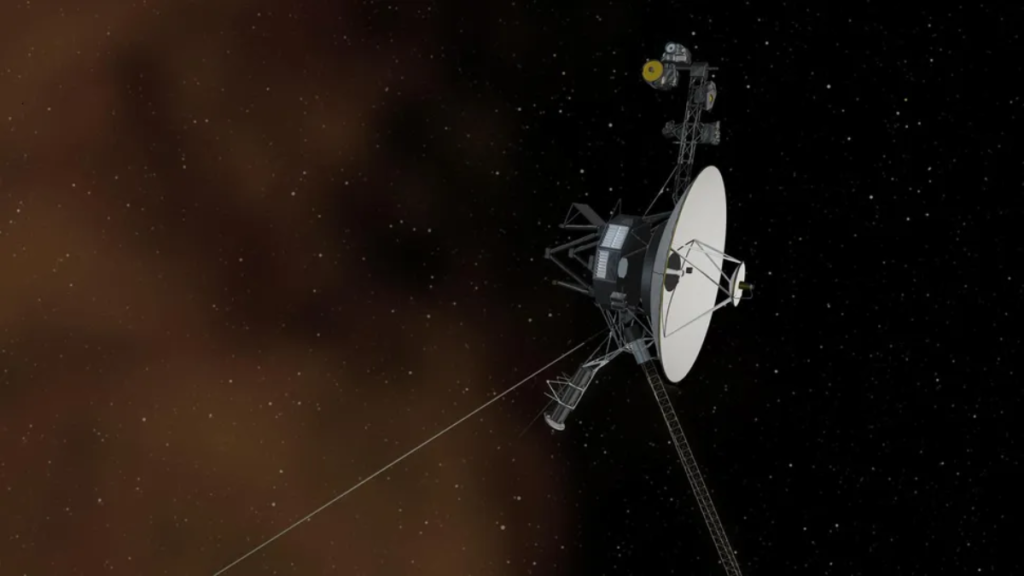
Voyager 1, NASA’s pioneering interstellar probe launched in 1977, has recently shut down one of its instruments to conserve power and extend its mission lifespan. This precautionary step highlights the challenges of operating technology far beyond its original design parameters. As the spacecraft ventures farther from the Sun, its radioisotope thermoelectric generators (RTGs) produce less electricity due to the natural decay of plutonium fuel. To manage the diminishing power supply, NASA engineers are selectively turning off non‑essential instruments, allowing Voyager 1 to continue transmitting valuable scientific data while preserving enough energy for critical systems.
Voyager 1 and its twin, Voyager 2, have been exploring the outer planets and the boundary of interstellar space for over four decades, providing humanity with unprecedented insights into the outer solar system and the nature of the heliosphere. The recent instrument shutdown is part of an ongoing effort to balance scientific output with the probes’ longevity. Each component on Voyager 1 has contributed to our understanding of the cosmos—from studying magnetic fields and charged particles to capturing images of distant planets. The instruments that remain operational are prioritized based on their scientific value and feasibility under reduced power conditions.
Voyager 1’s journey into interstellar space marks a significant milestone in space exploration. As the first human‑made object to enter this realm, it continues to send back data about the environment beyond our solar system, helping scientists study the transition between the heliosphere and the interstellar medium and offering clues about the structure and dynamics of our galaxy. The longevity of the Voyager missions testifies to the ingenuity and foresight of the engineers and scientists who designed and built these spacecraft. Despite being launched in an era of less advanced technology, both probes have far exceeded their expected operational lifetimes, underscoring the importance of robust engineering and adaptive mission management in deep‑space exploration.
As Voyager 1 travels alone through the cosmos, it carries a Golden Record—a message to any potential extraterrestrial life that may encounter the probe. This symbolic gesture reflects humanity’s enduring curiosity and desire to connect with the universe beyond our planet. Ongoing efforts to manage Voyager 1’s power consumption illustrate the challenges and triumphs of long‑duration space missions, and as the probe ventures further into the unknown, it remains a beacon of human achievement and a source of inspiration for future generations of explorers.




Comments are closed for this story.