
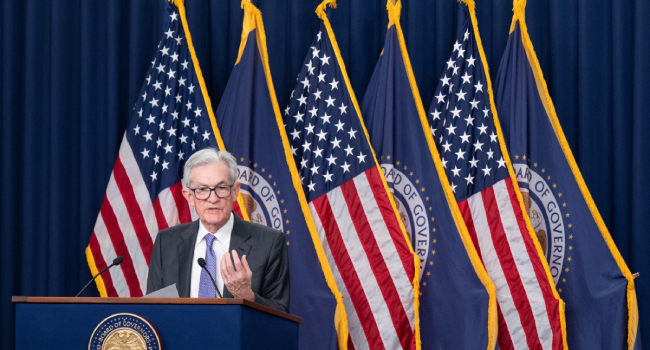
Jerome Powell has announced that after his term as Chairman of the U.S. Federal Reserve ends on 15 May, he will remain on the Board of Governors for an as‑yet‑undetermined period, possibly until the 2028 expiry of his governor’s term. Speaking at his final press conference as chair, Powell said he intends to “keep a low profile as a governor” and will leave the Board when he deems it “appropriate.”
Powell stressed that his decision is unrelated to criticism from elected officials and is driven by concerns over ongoing legal challenges to the central bank’s independence. Since assuming the chairmanship, he has faced repeated attacks from President Donald Trump, who has accused him of delaying interest‑rate cuts. The administration also sought the removal of Governor Lisa Cook over alleged mortgage‑fraud violations, a case now before the Supreme Court.
In parallel, the Justice Department opened a criminal probe into the Fed’s handling of renovation‑cost overruns, an investigation Powell described as an attempt to undermine the institution’s autonomy. The probe has since been dropped, and Powell said he will monitor future developments, noting he will not depart the Board until the investigation is “well and truly over.”
Powell’s remarks coincided with a Federal Open Market Committee meeting that left the policy rate unchanged at 3.50‑3.75 percent for a third consecutive session. The Fed’s statement cited “elevated inflation, in part reflecting the recent increase in global energy prices.” The vote revealed significant division: four of the twelve voting officials opposed the hold, including Governor Stephen Miran, who advocated a quarter‑point cut. Fed presidents Beth Hammack, Neel Kashkari and Lorie Logan supported the pause but dissented from the statement’s implication that future cuts were likely. This was the highest number of dissenting votes since 1992.
The meeting occurred against a backdrop of heightened geopolitical uncertainty, notably the U.S.–Israel conflict that has driven up energy costs and disrupted supply chains. Analysts are watching whether inflationary pressures could prompt the Fed to consider a rate increase rather than further cuts.
Powell also praised his likely successor, Kevin Warsh, for advancing in the Senate Banking Committee’s confirmation process. The committee approved Warsh’s nomination by a 13‑11 vote, despite objections from Democrats who warned of President Trump’s “attempt to seize control of the Fed.” Senators Elizabeth Warren and Raphael Warnock highlighted the persistent threats to Fed independence, while Republican Senator Thom Tillis, initially opposed to Warsh without a concluded investigation, shifted his support after the Justice Department’s withdrawal of the probe.
Powell expressed confidence in Warsh’s ability to maintain consensus among Fed governors, stating, “He testified very strongly to that effect in his hearing, and I’ll take him at his word.”
The continuation of Powell’s service as a governor underscores ongoing tensions between the Federal Reserve and the executive branch, as well as the institution’s resolve to preserve its autonomy amid legal and political pressures.



Comments are closed for this story.