
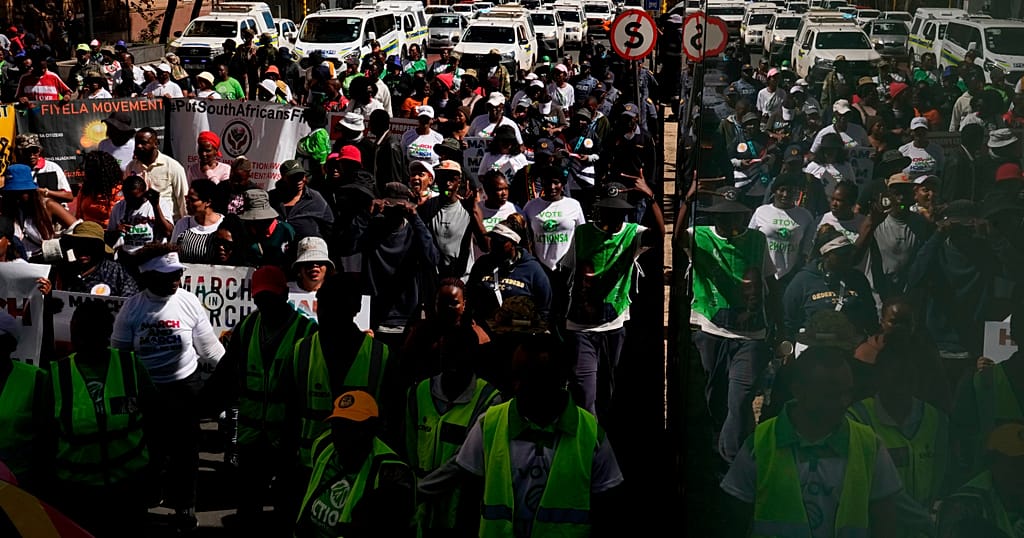
Johannesburg, South Africa – Hundreds of demonstrators gathered in the city’s central business district on Wednesday to protest what they describe as uncontrolled illegal immigration and its impact on South Africans’ economic opportunities. The rally is part of a broader wave of anti‑immigration demonstrations that began in Pretoria on Tuesday, with similar marches reported in other provinces.
Organisers said the protests are not xenophobic but aim to draw attention to perceived violations of constitutional rights and to demand stricter enforcement of existing immigration legislation. “We are here to collaborate on a progressive march involving different organisations and national forums to fight against foreign nationals who are taking advantage of our economic freedom,” said Tshepo Totwe, secretary of the Abahambe Movement. Totwe added that the movement’s purpose is to counter accusations of xenophobia and to assert South Africans’ right to freedom of expression and legal protection.
Sanele Nkambule, treasurer of the March and March movement, called on the national government to formally commit to the concerns outlined in the protesters’ memorandum. “We request a declaration affirming the government’s intention to uphold the rule of law, enforce existing legislation, and prioritise the safety, security and socioeconomic well‑being of South Africans,” Nkambule said.
Protesters urged the Department of Home Affairs to accelerate the processing of immigration cases and to implement mass deportations of individuals deemed to be residing in the country illegally. They claim that current enforcement is inconsistent and that illegal entrants strain public services, job markets and housing.
The demonstrations come amid heightened public debate over immigration policy in South Africa. The country’s Constitution guarantees non‑discrimination and the right to equality, while the Immigration Act of 2002 provides the legal framework for entry, stay and removal of non‑citizens. Critics argue that enforcement has been uneven, leading to frustration among some South Africans who feel that illegal immigration contributes to rising unemployment and crime.
Government officials have not yet responded to the demands. The Department of Home Affairs typically reviews immigration enforcement strategies annually, but recent budget constraints have limited the department’s capacity to conduct large‑scale deportations. Analysts note that any policy shift will need to balance constitutional protections for refugees and asylum seekers with public concerns about illegal migration.
The protests are being closely watched by civil‑society groups, which warn that rhetoric framing immigrants as economic threats can fuel social tension. International observers have highlighted South Africa’s obligations under international human‑rights conventions, emphasizing the need for humane treatment of all migrants.
As the anti‑immigration movement gains momentum, the government’s next steps—whether through legislative amendment, increased enforcement or dialogue with community organisations—will likely shape the country’s immigration landscape and its broader social cohesion.


Comments are closed for this story.