
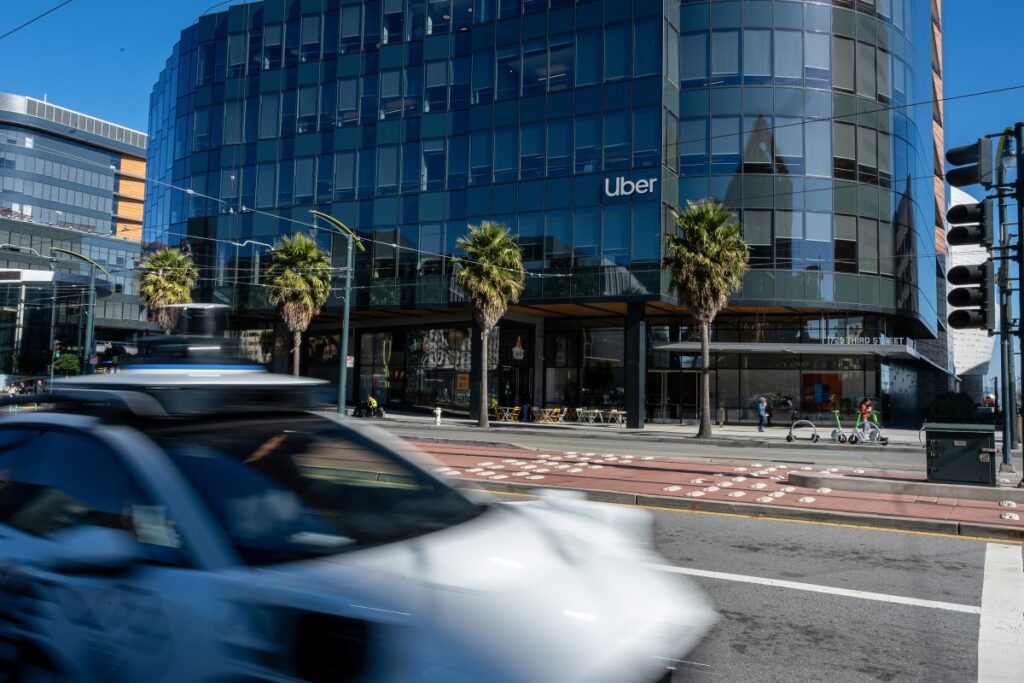
Uber is positioning its driver fleet as a large‑scale data collection platform for autonomous‑vehicle (AV) development. Chief technology officer Praveen Neppalli Naga outlined the strategy at TechCrunch’s StrictlyVC event in San Francisco, explaining that the company plans to equip human‑driven cars with sensor kits that can capture real‑world driving data for AV firms and other AI‑training initiatives.
The proposal builds on Uber’s AV Labs program, announced in January, which currently uses a limited number of Uber‑owned, sensor‑equipped vehicles separate from the driver network. Naga said the long‑term goal is to extend the technology to a “fraction” of Uber’s millions of drivers worldwide, creating a rolling data‑collection network that would dwarf the data resources of individual AV manufacturers.
According to Naga, the principal obstacle for autonomous‑driving development has shifted from hardware and algorithms to data availability. He noted that companies such as Waymo must deploy fleets to gather diverse scenarios, a process that requires significant capital. By supplying a shared “AV cloud” of labeled sensor data, Uber aims to lower that barrier. Partners can query the dataset to train models and run them in “shadow mode” against real Uber trips, allowing simulation of AV performance without field testing.
Uber already collaborates with 25 AV companies, including London‑based Wayve, and intends to increase direct investments in these partners. The data platform could also serve as a testing ground for models, providing Uber with insight into how emerging AV technologies would function on its rideshare network.
Naga emphasized that the initiative is not driven by immediate profit: “Our goal is not to make money out of this data. We want to democratize it.” Nonetheless, the strategic value of possessing a proprietary, large‑scale training dataset may afford Uber significant influence over an industry that depends on its marketplace for trip volume.
The move follows Uber’s earlier decision to abandon its own self‑driving car program, a retreat that co‑founder Travis Kalanick later described as a mistake. By shifting focus from building autonomous vehicles to supplying the data that powers them, Uber seeks to remain integral to the evolving mobility ecosystem.
If the data‑sharing model materialises, Uber could become a critical infrastructure provider for the AV sector, potentially shaping how autonomous technologies are developed and deployed worldwide. Further details on implementation timelines and regulatory compliance are expected as the company expands the sensor program across its driver base.




Comments are closed for this story.