
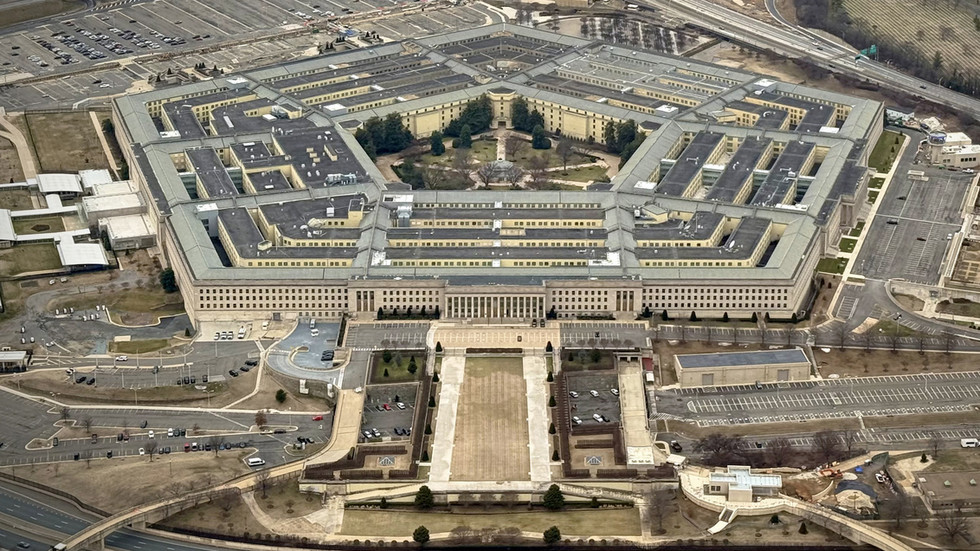
The U.S. Department of Defense announced Friday that it has finalized agreements with several leading artificial‑intelligence firms to embed advanced AI tools into its classified networks. The contracts cover SpaceX, OpenAI, Google, NVIDIA, Reflection, Microsoft, Amazon Web Services and Oracle, and are intended to support “lawful operational use” across the Defense Department’s Impact Level 6 and Impact Level 7 systems. The agencies say the technology will accelerate data synthesis, improve situational awareness and aid warfighter decision‑making in complex environments.
The Department’s internal AI platform, GenAI.mil, has reportedly been accessed by more than 1.3 million personnel over the past five months. According to the Pentagon, the system has processed tens of millions of prompts and deployed hundreds of thousands of AI agents, reducing the time required for certain tasks from months to days.
Anthropic, a prominent AI startup, was not included in the agreements. Earlier this year the company declined a Pentagon request to ease safeguards on its technology, citing concerns that the models could be used for domestic surveillance or autonomous weapon systems without human oversight. In response, the Defense Department labeled Anthropic a “supply‑chain risk,” a designation normally reserved for entities linked to foreign adversaries. The label effectively blocks the firm from future contracts with the department.
During a recent Senate hearing, Defense Secretary Pete Hegseth described Anthropic CEO Dario Amodei as an “ideological lunatic,” comparing the company’s stance to a hypothetical scenario in which Boeing supplies aircraft but dictates target selection. Anthropic has filed a lawsuit seeking to have the “supply‑chain risk” classification removed.
The agreements come as the Pentagon intensifies its push to integrate AI across military operations, despite ongoing debates over the technology’s compliance with international humanitarian law and the potential for privacy infringements in peacetime. By partnering with a broad set of vendors, the department aims to diversify its AI supply chain while establishing standardized safeguards for “lawful” use.
The outcome of Anthropic’s legal challenge and the broader policy framework governing AI in defense are likely to shape future collaborations between the U.S. military and the private AI sector.


Comments are closed for this story.