
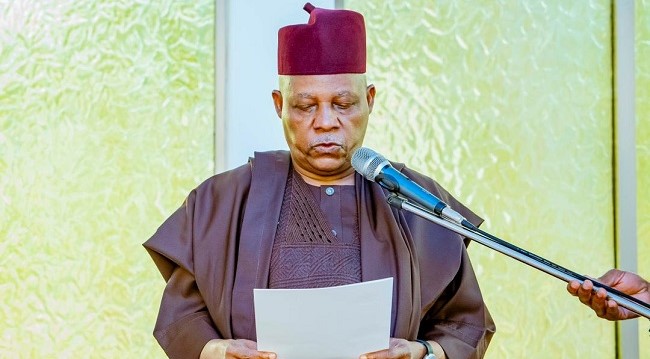
Vice President Kashim Shettima said Nigeria is now moving in the right direction as the economic reforms of President Bola Tinubu’s administration begin to show tangible results. Speaking as a special guest of honour at the Nasarawa Economic Summit 2026 on May 6, Shettima highlighted several policy measures, including the removal of the fuel subsidy, that he said have restored investor confidence and stabilised macro‑economic indicators.
Shettima noted that the decision to end petrol subsidies was not part of Tinubu’s inaugural speech in 2023 but an on‑the‑spot choice made as the country faced dwindling foreign reserves. “National reserves were insufficient to import fuel for even one month,” he told the audience. “The president did not panic; he recognised the broader impact and acted decisively.”
According to the vice president, the reforms have already begun to bear fruit. Gross external reserves, which fell to below $46 billion in 2025, are now recovering, and the stock market has rallied sharply. He cited the rise in share prices of major banks and insurers—from roughly N40‑N50 a year ago to about N130 today—as evidence that “confidence is returning to the marketplace.” He added that investors who entered the capital market a year ago have seen their holdings triple in value.
The remarks come after President Tinubu addressed foreign investors in Paris, saying that the removal of the “burden” of fuel subsidies has contributed to foreign‑exchange stability. A statement from Tinubu’s special assistant on social media, Dada Olusegun, echoed the president’s view that the subsidy’s elimination has helped steady the FX market.
Tinubu’s administration has also been promoting broader fiscal discipline and transparency. Adviser on Information and Strategy Bayo Onanuga described the reform programme as aimed at eliminating economic distortions and laying the groundwork for inclusive, sustained growth. Finance Minister and Coordinating Minister of the Economy Taiwo Oyedele reiterated that the fuel subsidy will not be reinstated, arguing that subsidies create market distortions and that the petroleum market can regulate prices without government intervention.
The vice president’s endorsement of the reforms underscores the government’s commitment to a market‑driven recovery amid concerns about the cost of living. As Nigeria seeks to attract foreign capital and rebuild its external reserves, the continued implementation of these policies will be crucial for maintaining the momentum highlighted at the Nasarawa Economic Summit.


Comments are closed for this story.