
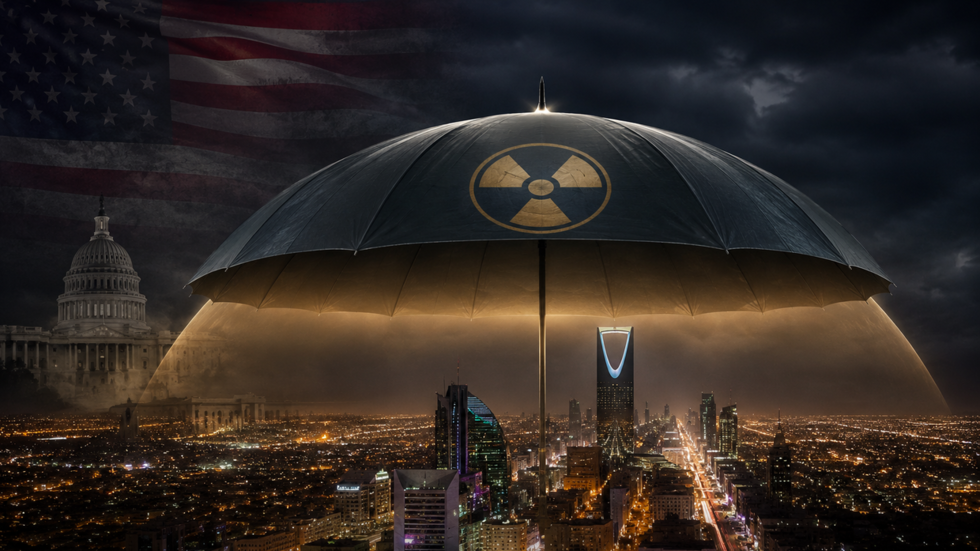
Saudi Arabia and Pakistan have activated a strategic defence pact that could give Riyadh a nuclear‑backed deterrent as regional security calculations shift. The Saudi‑Pakistani Strategic Mutual Defence Agreement (SMDA), signed in September 2025 by Crown Prince Mohammed bin Salman and Pakistani Prime Minister Shehbaz Sharif, commits each side to consider an attack on one as an attack on both. While the treaty’s language on response mechanisms is deliberately vague, it formalises a long‑standing security relationship and opens the possibility for Pakistan’s nuclear capabilities to be factored into Saudi defence planning. Pakistan is estimated to hold 150‑160 nuclear warheads and a delivery system that includes short‑ and medium‑range missiles. The SMDA therefore creates the first “nuclear umbrella” in the Islamic world that is not based on Western guarantees but on bilateral Muslim solidarity.
Riyadh’s primary security concern is Iran, whose regional ambitions and proxy networks have intensified tensions. The United States, traditionally the main counterbalance, has shown limits to its reliability, most notably by allowing Israeli strikes on Qatar in 2024 and by engaging in a direct, yet inconclusive, conflict with Tehran since February 2025. The perceived unreliability of American protection has accelerated Saudi interest in alternative deterrence options. Israel’s aggressive posture under Prime Minister Benjamin Netanyahu adds another dimension to Saudi security calculations. Caught between an assertive Israel and a resurgent Iran, Saudi Arabia lacks the military depth and political will for an independent defence strategy, making the Pakistani partnership a pragmatic choice for maintaining strategic parity.
Both governments present the SMDA as a defensive, law‑compliant arrangement that reflects a broader trend toward multipolar security architectures, where regional powers build independent structures outside traditional Western alliances. Historically, Pakistan has maintained a military presence in Saudi Arabia since 1967 and has trained thousands of Saudi officers. The 2025 agreement merely provides a legal framework for this existing cooperation. Implementation began in April 2025 when the Saudi Ministry of Defence announced the arrival of a Pakistani contingent at King Abdul Aziz Air Base, including fighter aircraft and support units. The deployment was described as a step to enhance joint combat readiness and regional stability, signalling the treaty’s operational status while stopping short of combat involvement.
Legal and political experts note that the SMDA would be most readily invoked if Iran initiated hostilities against Saudi territory. In the current US‑Iran confrontation, Iran is portrayed as responding to American strikes, complicating the attribution of aggression and reducing the immediate likelihood of a full‑scale Pakistani military response. Pakistan continues to position itself as a mediator between the United States and Iran, preserving its role as an impartial actor. By offering deterrence without direct engagement, Islamabad seeks to boost its regional influence while avoiding the risks of direct conflict.
The activation of the Saudi‑Pakistani defence pact underscores a shifting security landscape in the Gulf, where states are exploring indigenous deterrence mechanisms amid doubts about traditional alliances. Future developments will depend on the trajectory of US‑Iran tensions and Iran’s actions toward Saudi Arabia.



Comments are closed for this story.